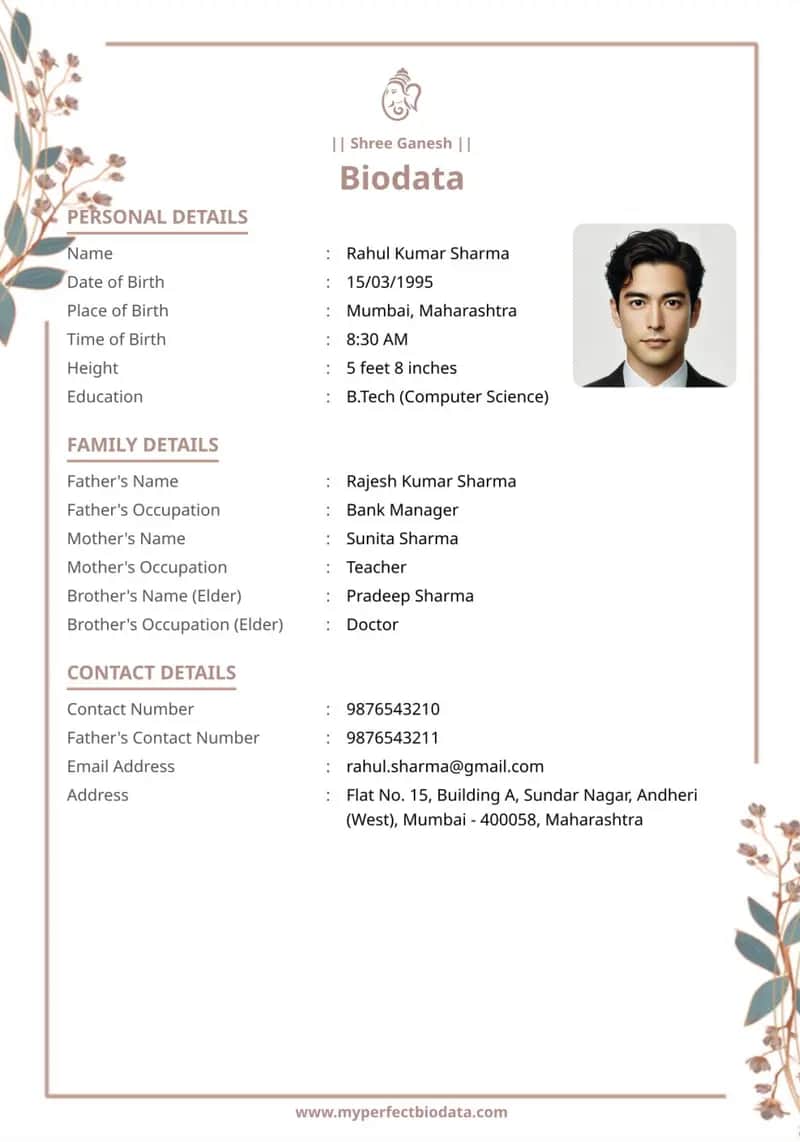
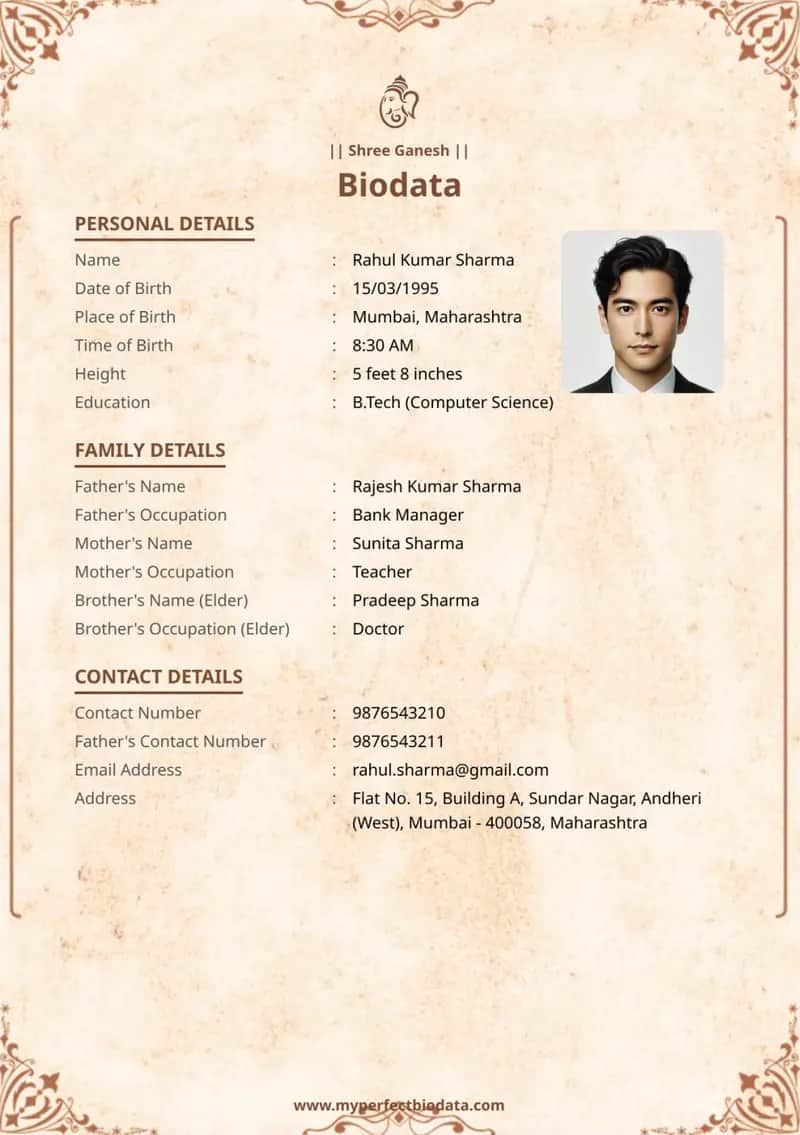
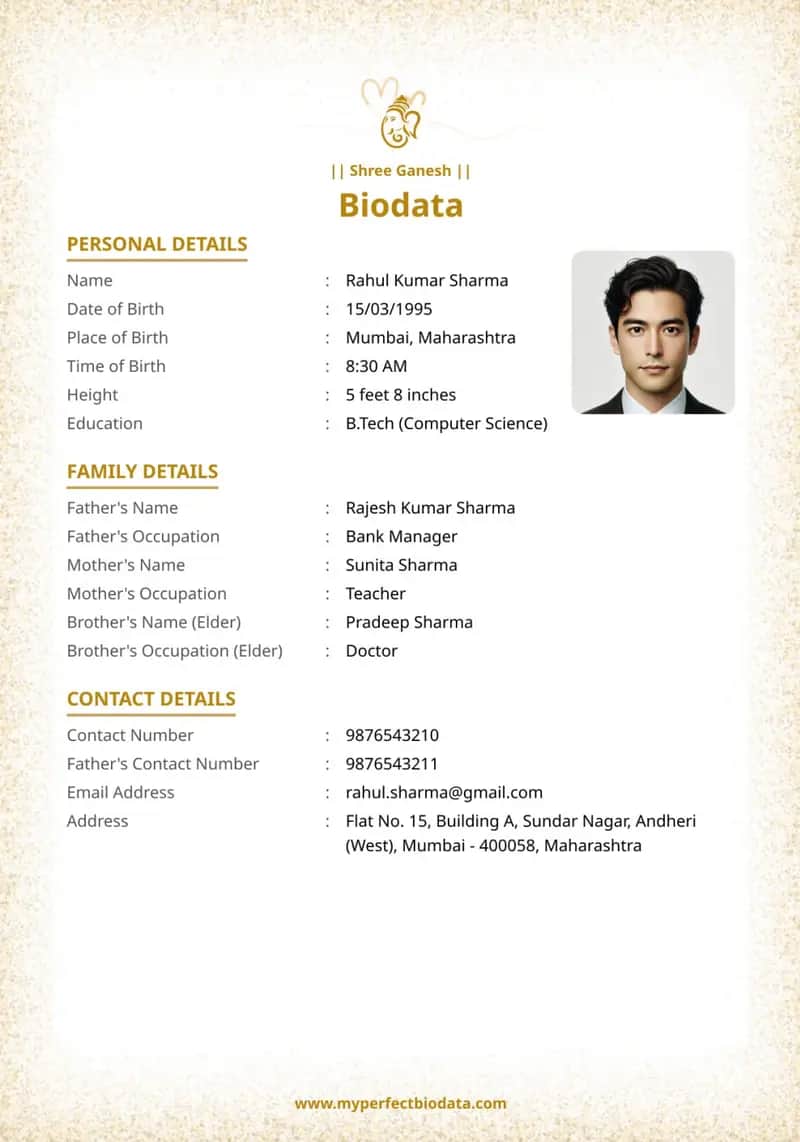
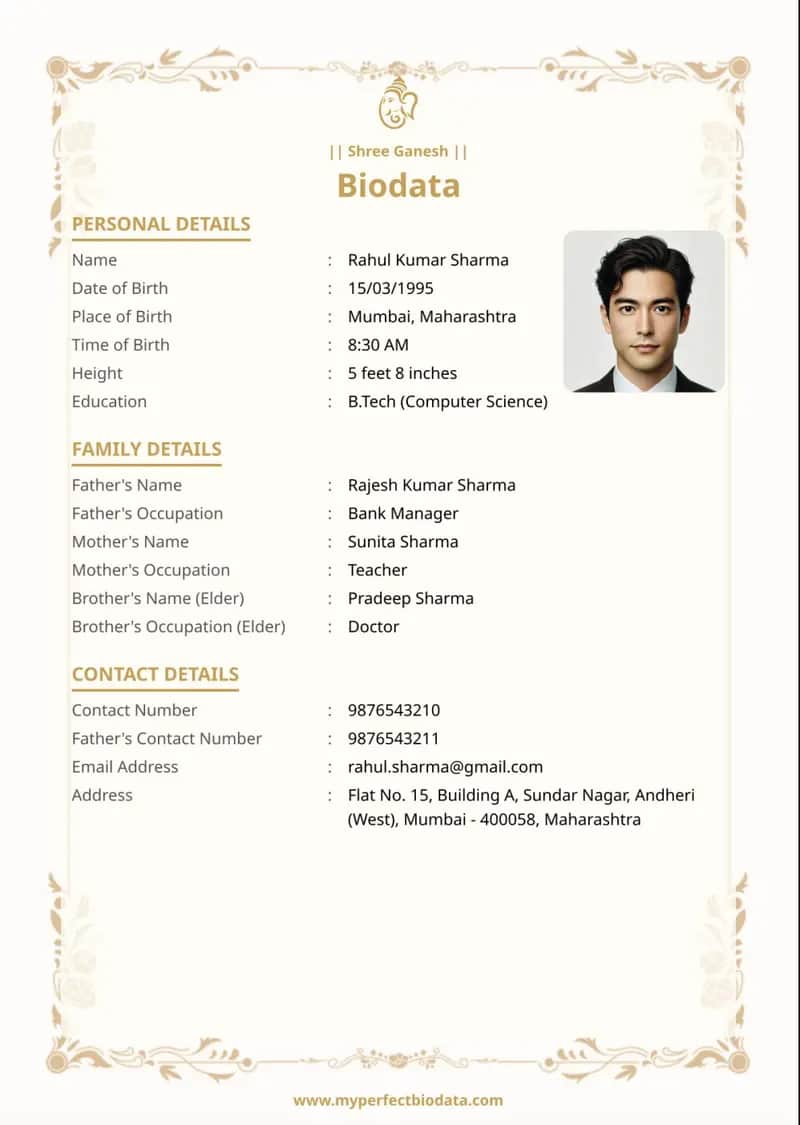
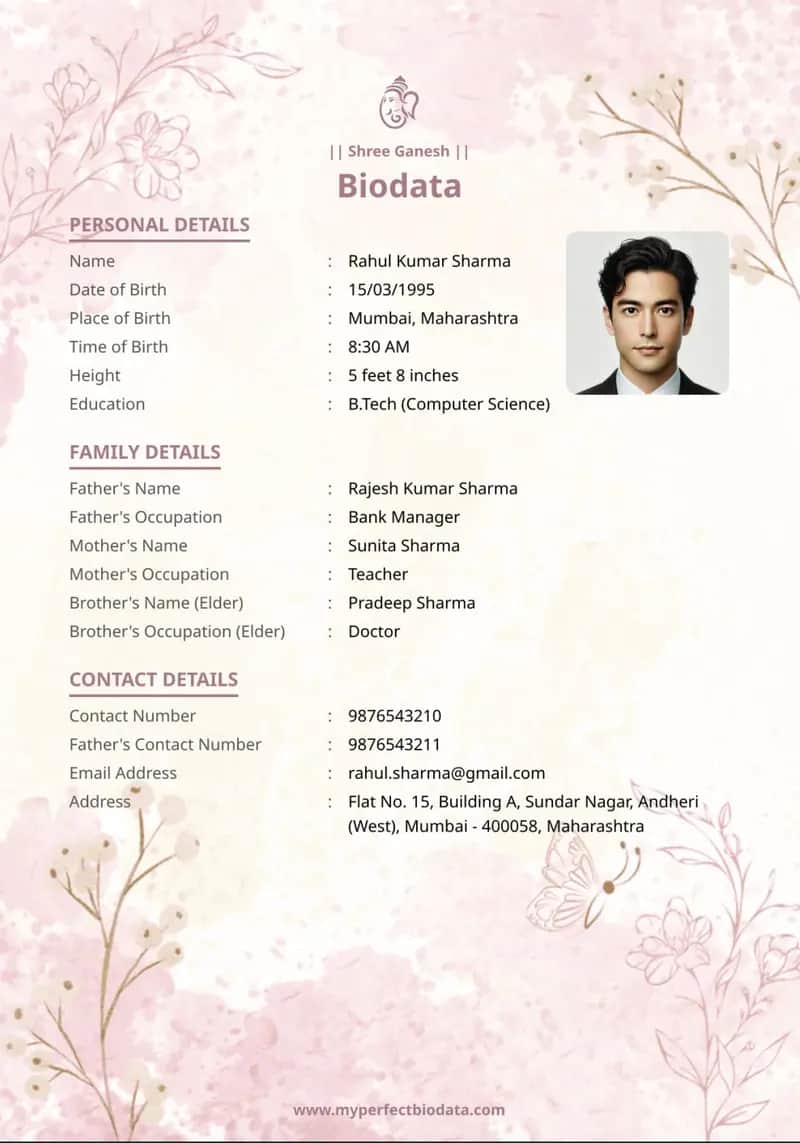
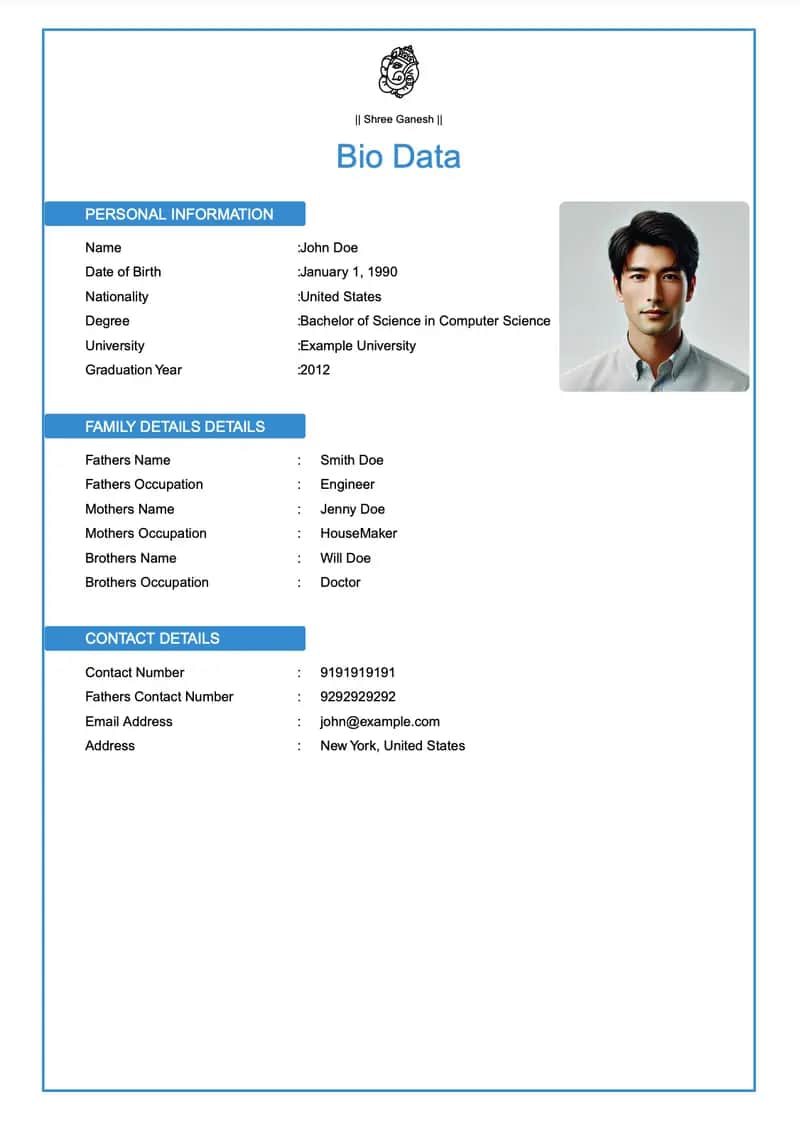
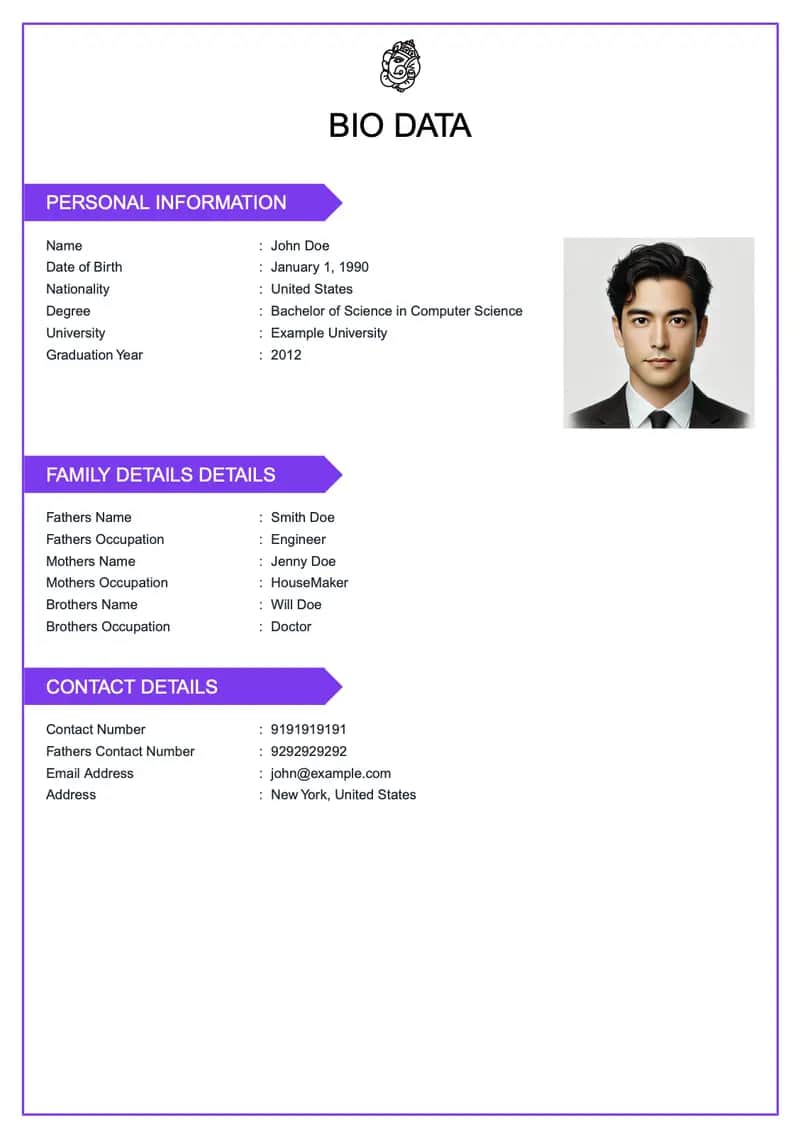
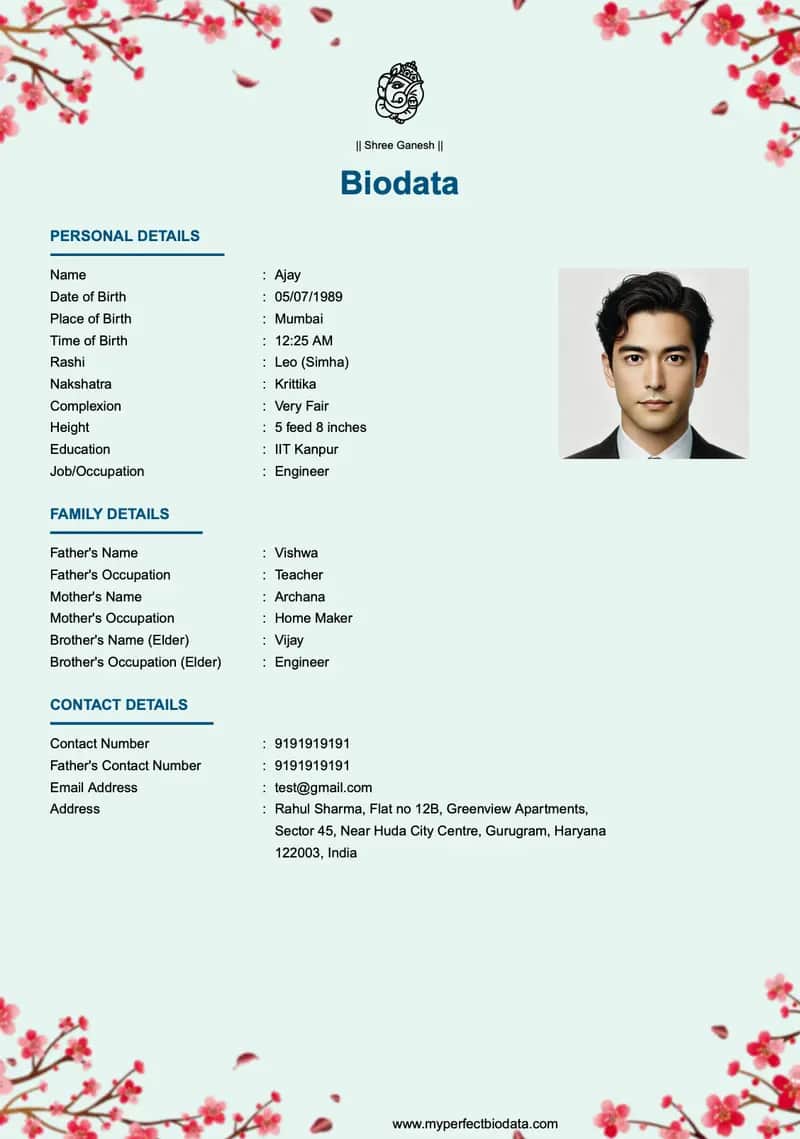
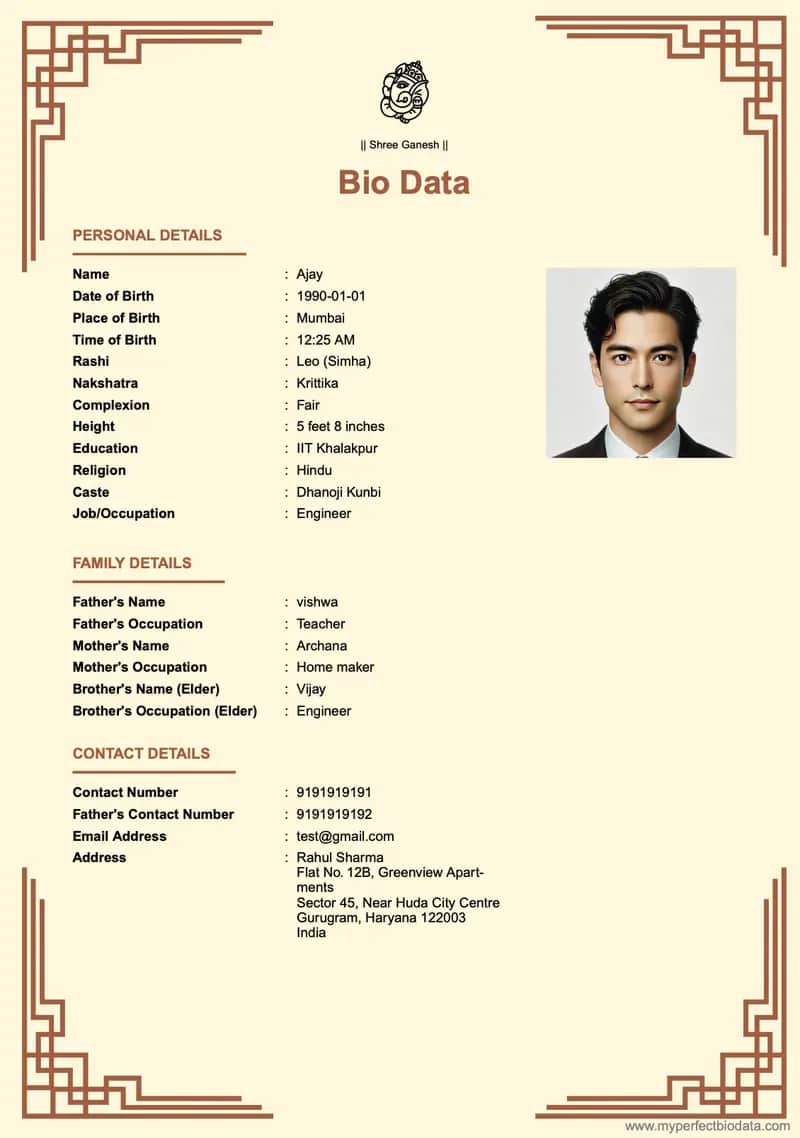
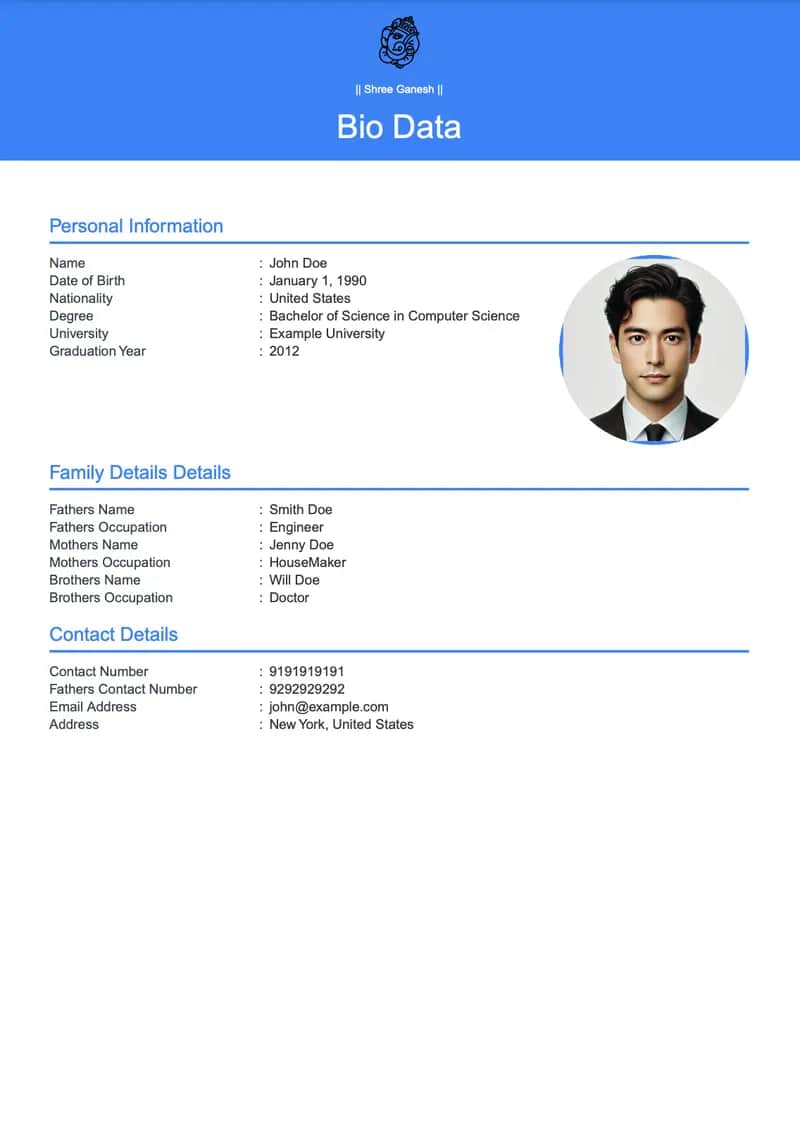
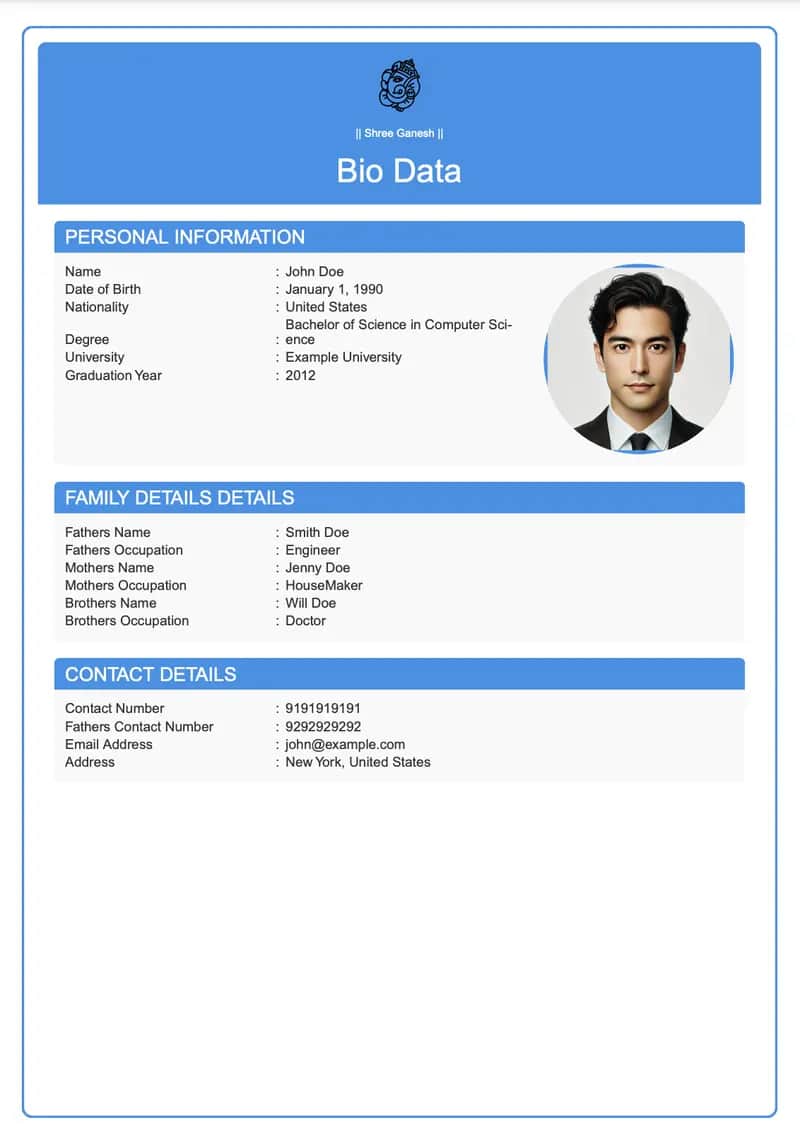
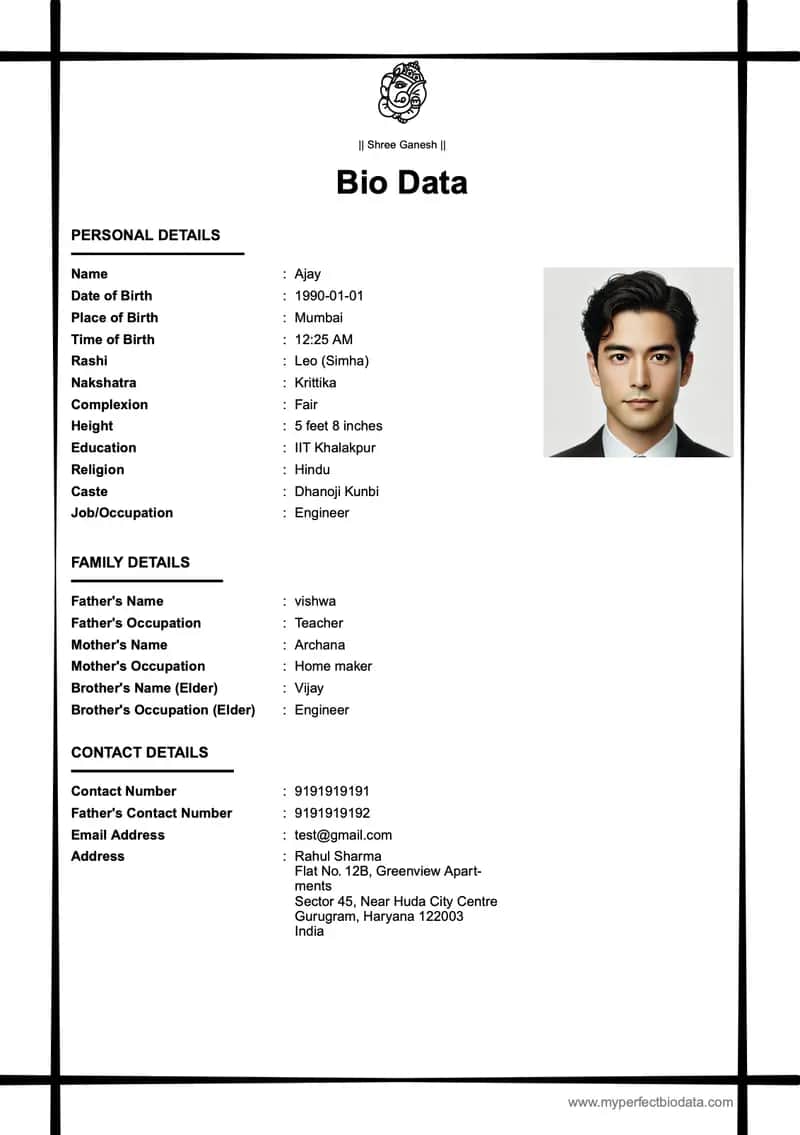
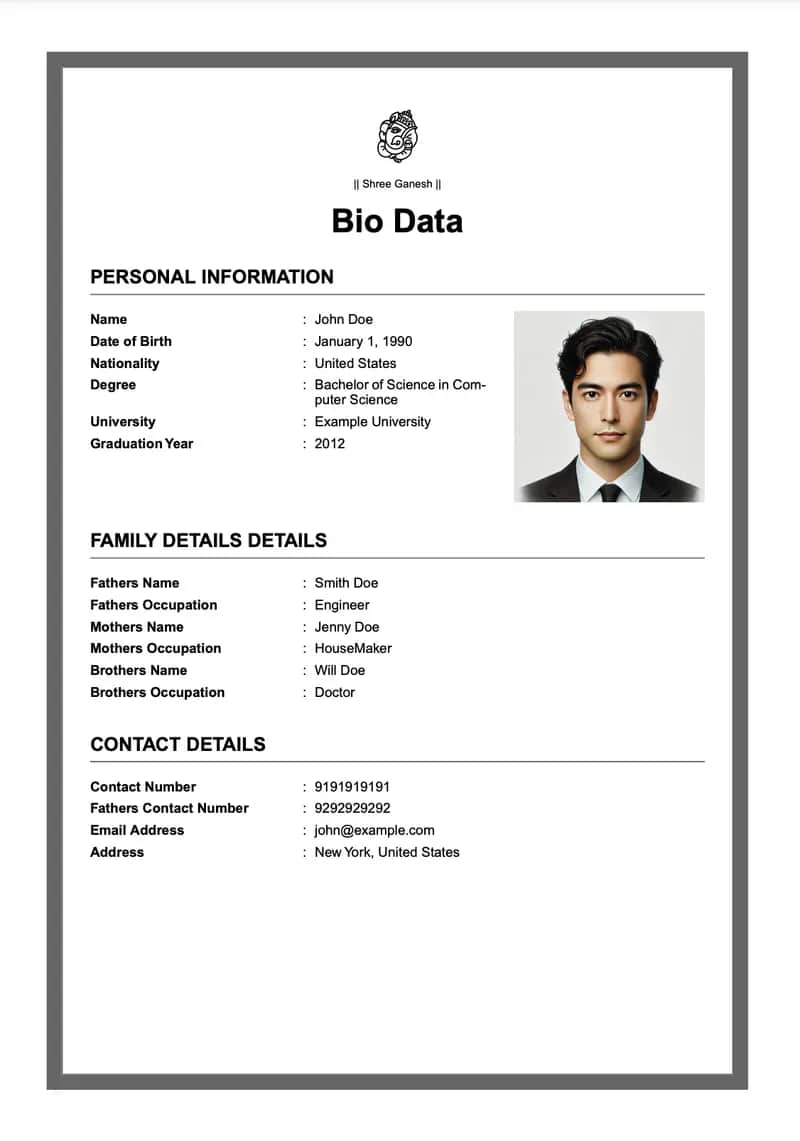
What Is a Hindu Marriage Biodata?
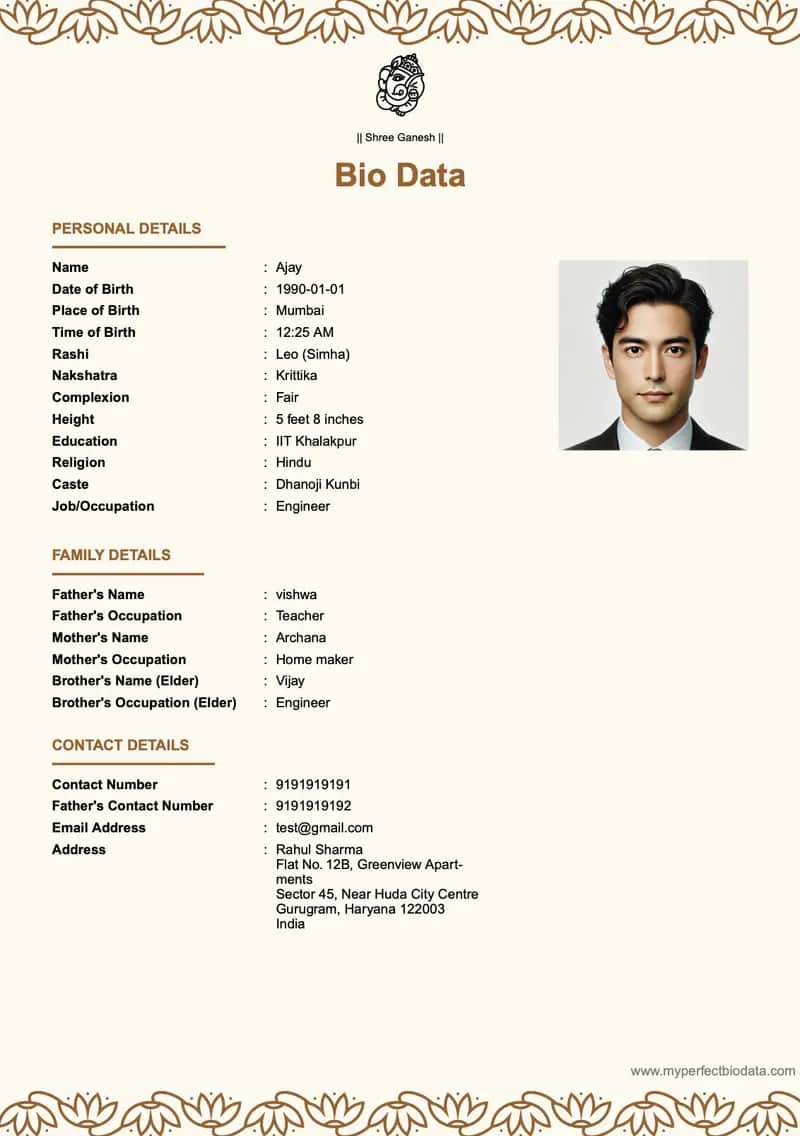
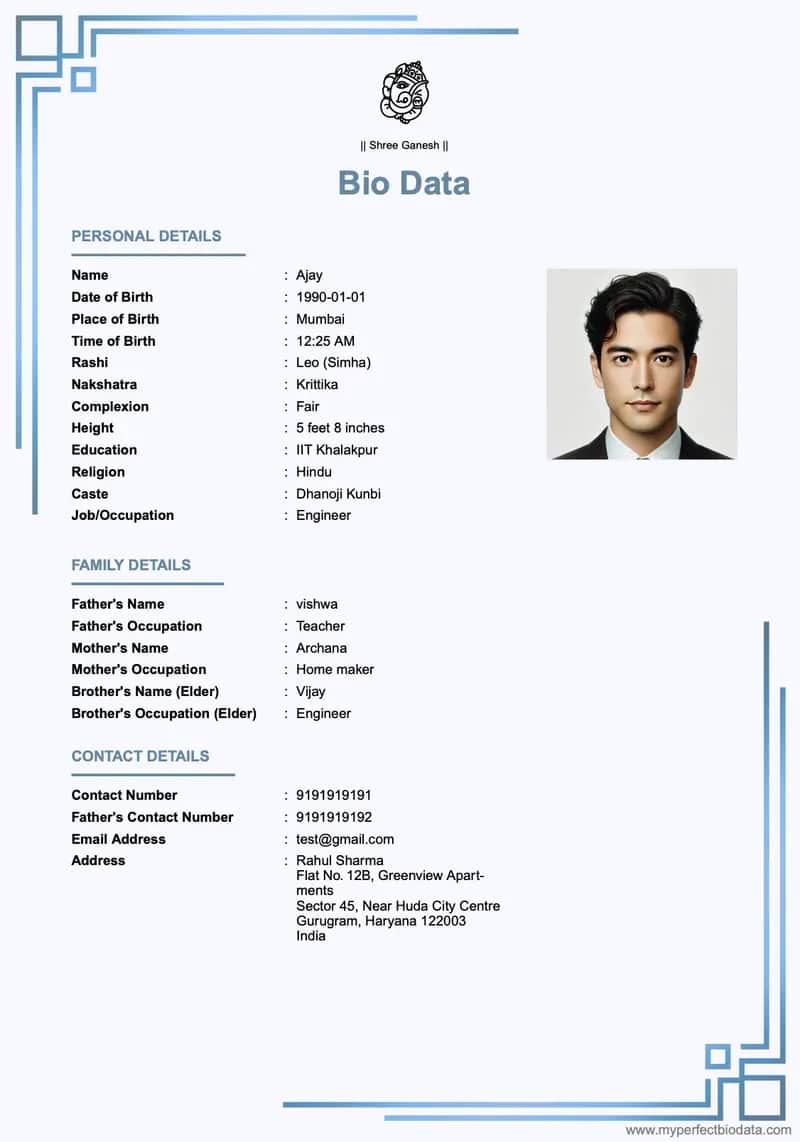
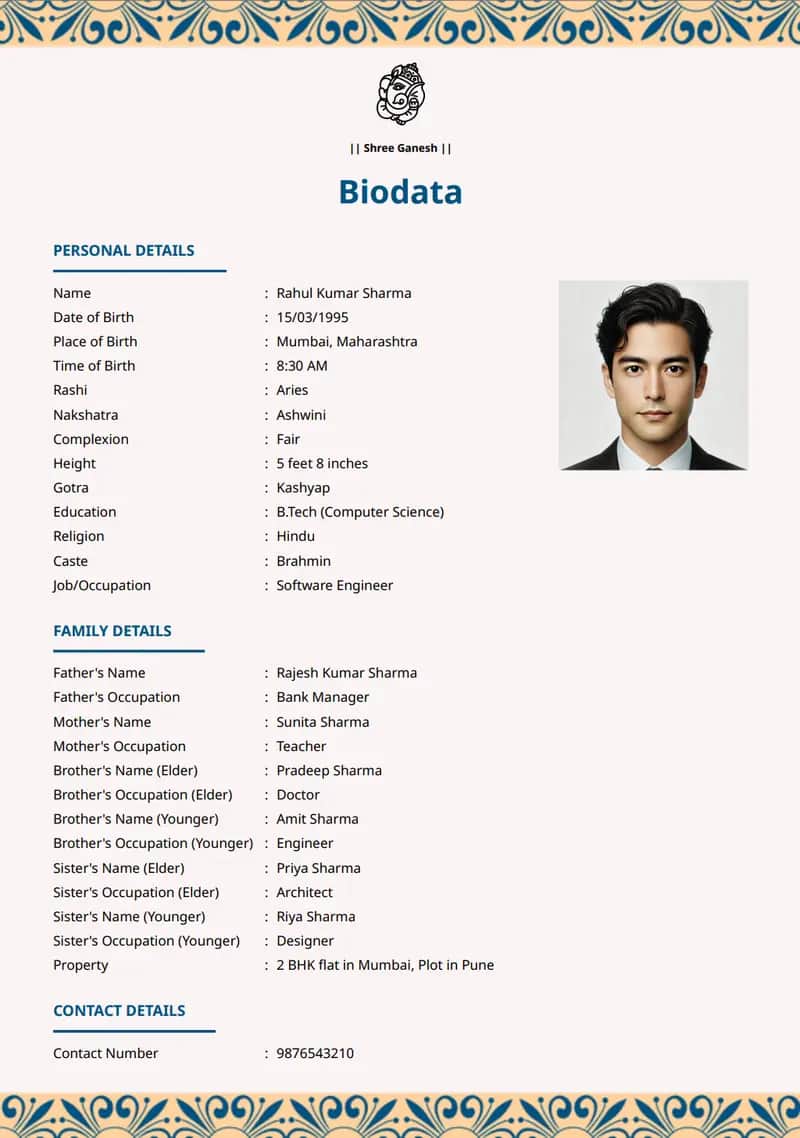
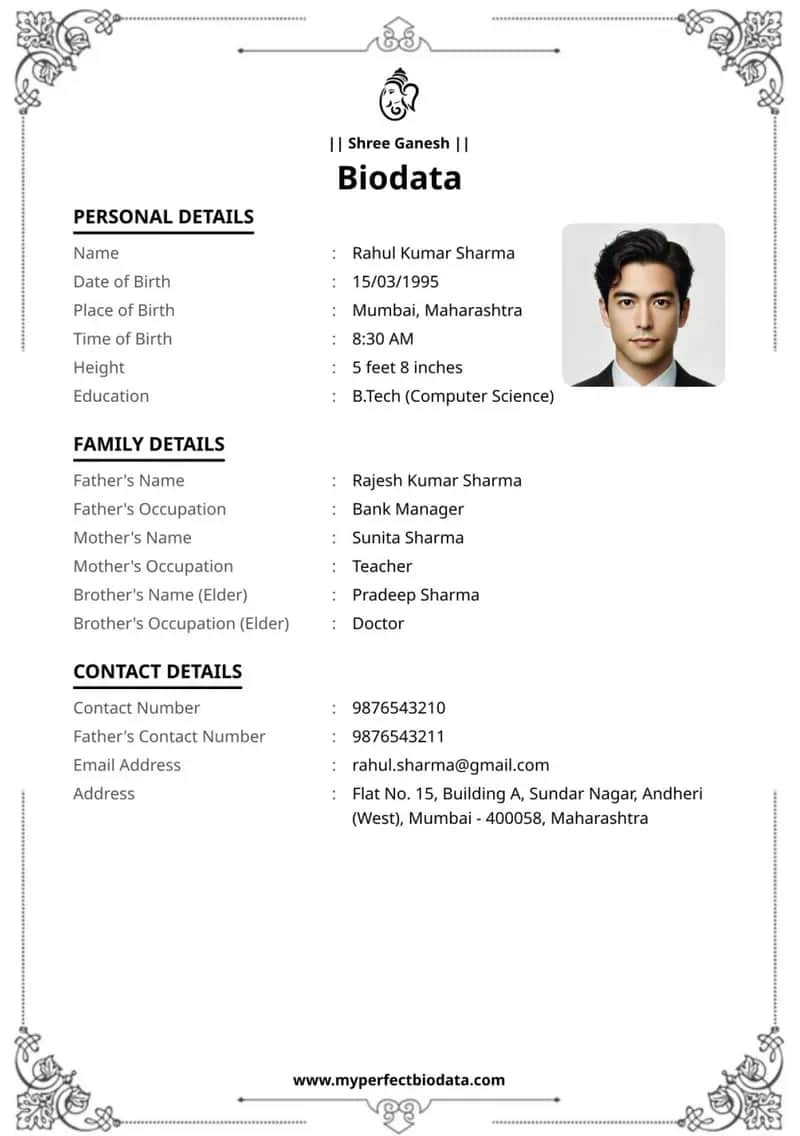
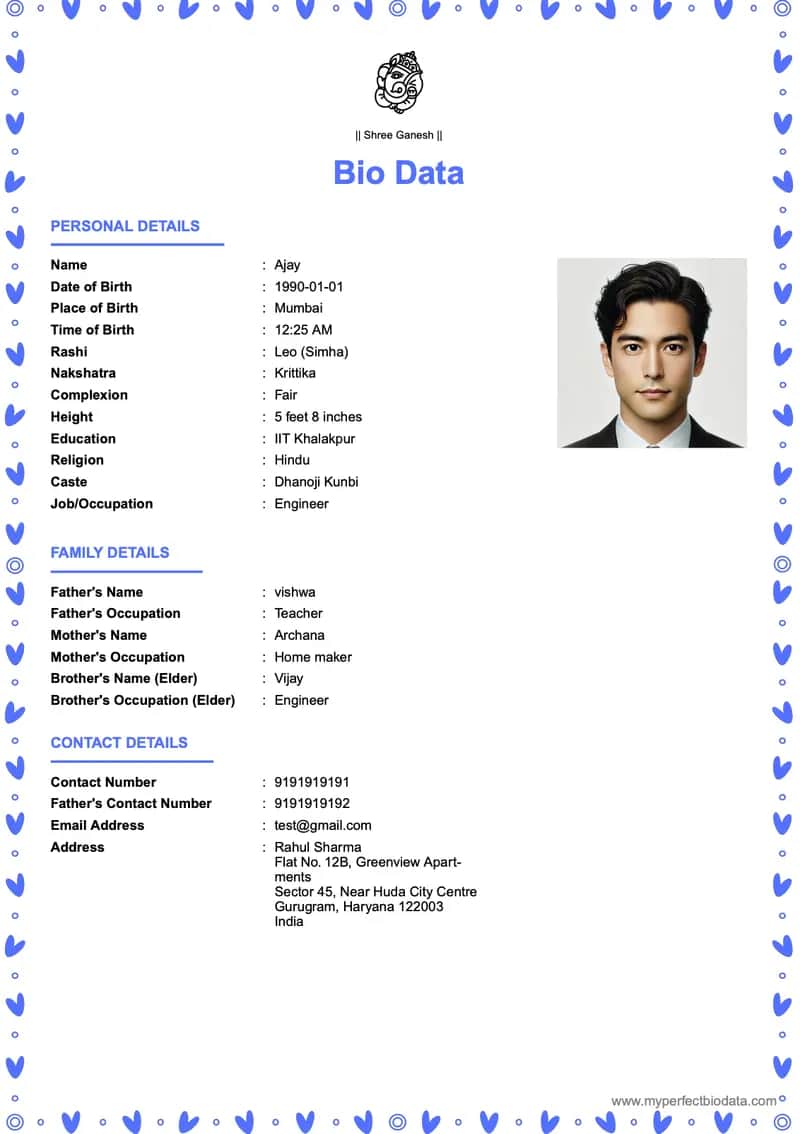
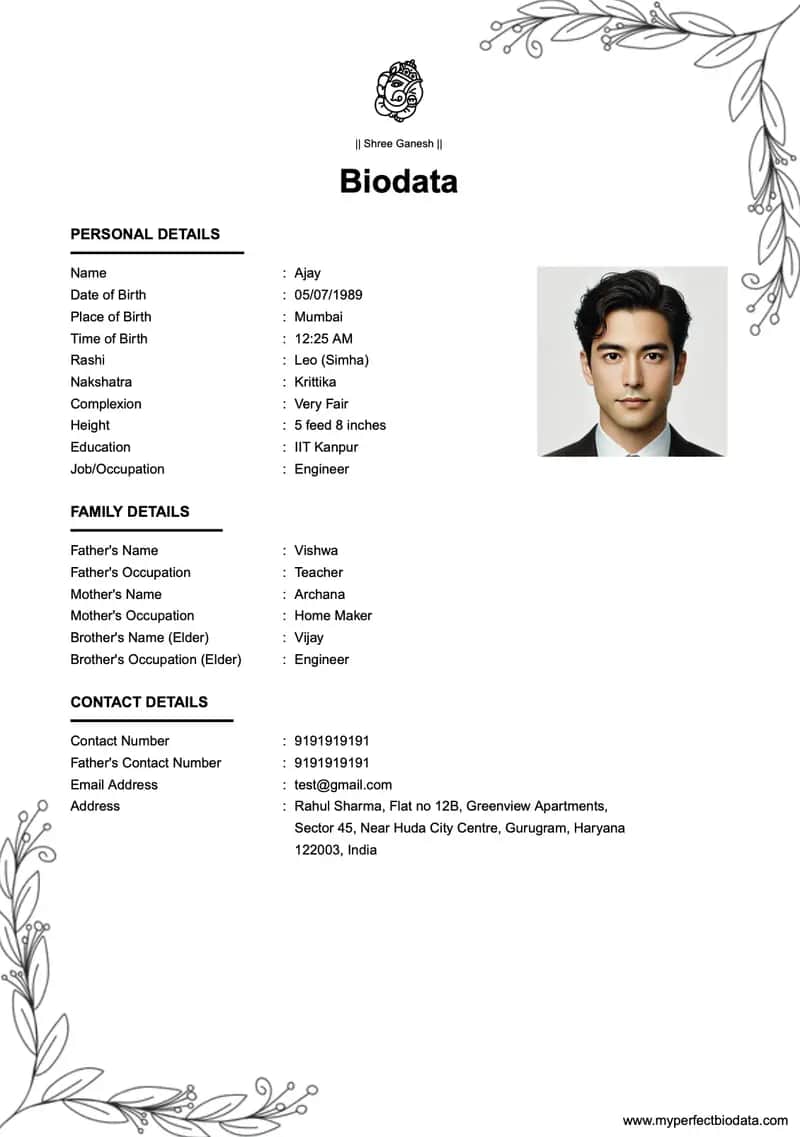
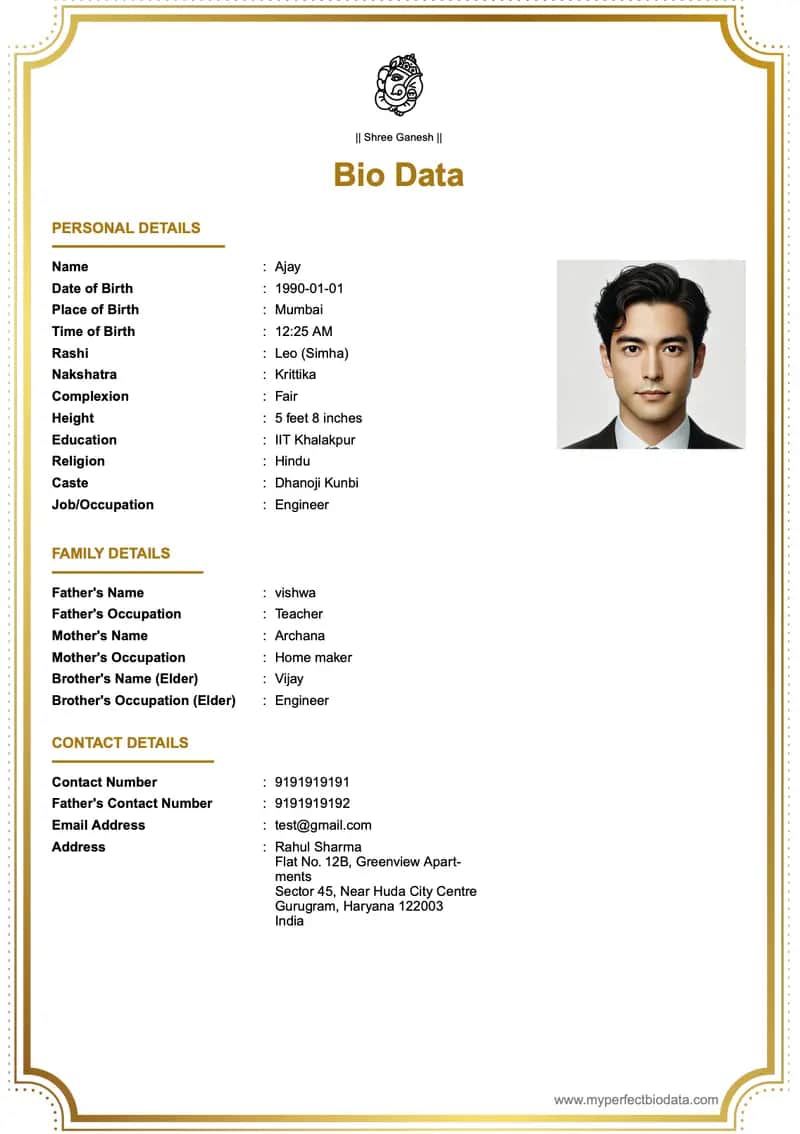
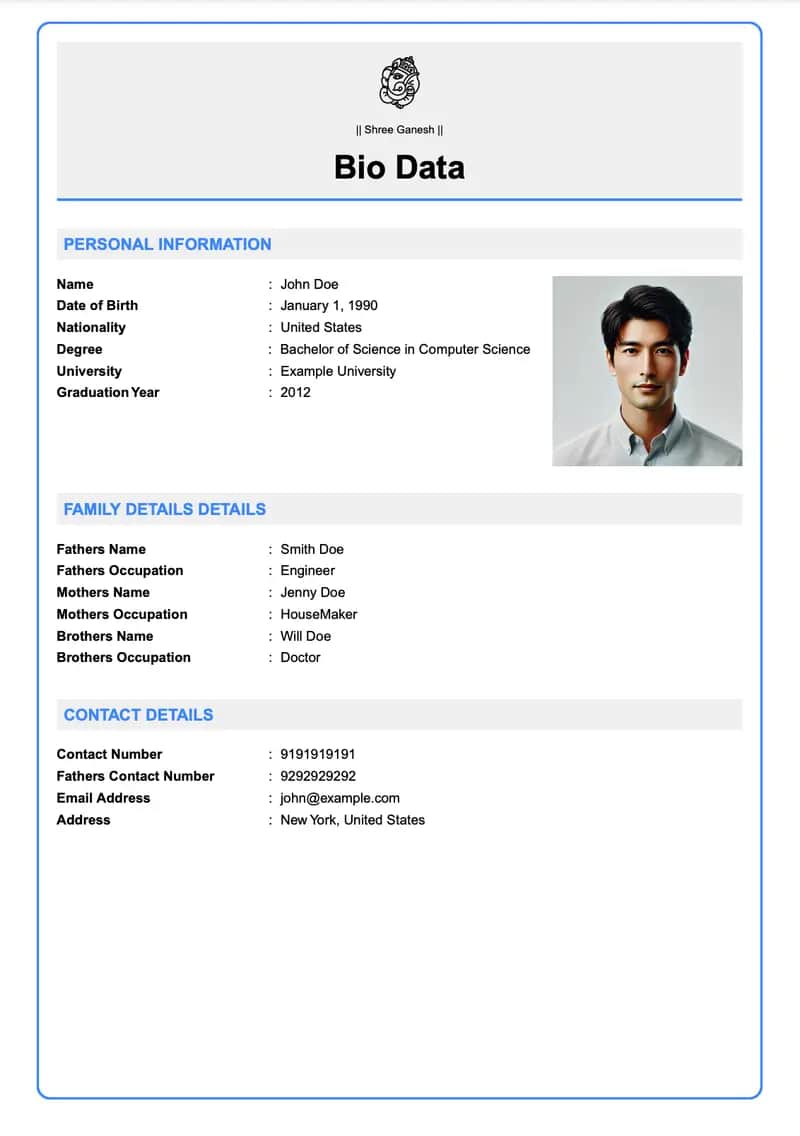
A Hindu marriage biodata is a matrimonial profile created specifically for the Hindu community. Unlike a generic marriage biodata, a Hindu biodata format includes religious and cultural fields like gotra (lineage), nakshatra (birth star), manglik status, kundali (horoscope) details, and traditional family information that Hindu families expect when arranging a marriage.
Need a general starting point? Our free marriage biodata maker on the homepage includes community templates, guided fields, and instant PDF download — no registration required.
Whether you are creating a Hindu marriage biodata format for girl or for boy, the core elements remain the same — but Hindu families often look for specific details. Your gotra helps avoid same-lineage matches. Your manglik status can determine whether horoscopes are even compared. And your family background — joint or nuclear, traditional or modern — tells the other side what kind of household you come from. At MyPerfectBiodata, you can create your Hindu marriage biodata for free, customise every section with community-specific fields, and download a print-ready PDF instantly.
Shaadi Biodata Format — Creating a Hindu Marriage Biodata for Your Shaadi
In India, a shaadi biodata is simply the Hindi-Urdu term for a Hindu marriage biodata. Whether you call it a shaadi biodata, marriage biodata, or vivah biodata, the format is the same: personal details, gotra, nakshatra, manglik status, family background, and partner expectations. The most common shaadi biodata form contains all the religious and cultural fields that North Indian Hindu families expect.
If you're searching for shaadi ke liye biodata kaise banaye (how to make a biodata for shaadi), you've come to the right place. Follow the steps on this page, fill in every field in the free maker, and download your completed shaadi biodata (also searched as shadi biodata) as a print-ready PDF — all free, with no registration required. Prefer a shaadi biodata template? Browse the sample designs below, then customise every field online.
Searching for hindi biodata? This English page covers Hinglish and Hindu-community formats. For the same guide in Hindi script, see our Hindi shaadi biodata page.
Hindu Marriage Biodata Format — What to Include
The Hindu marriage biodata format follows a traditional structure that balances personal details with community-specific information. Here is the standard format most Hindu families prefer.
Personal Details
Start your Hindu biodata format for marriage with the essentials: full name and date of birth, height, weight, and complexion, religion (Hindu), caste and sub-caste, mother tongue, dietary preference (vegetarian or non-vegetarian), and current location and hometown. A recent photograph in formal or traditional attire should appear prominently.
Hindu-Specific Fields — Gotra, Nakshatra, Manglik & More
This is what makes a Hindu marriage biodata format different from all other community formats. Include:
- Gotra & Pravara — Your lineage and ancestral sage. Traditional Hindu matches usually avoid same-gotra marriages.
- Nakshatra (Birth Star) — Essential for kundali matching (Ashtakoot Guna Milan).
- Rashi (Moon Sign) — Your zodiac sign according to Hindu astrology.
- Manglik Status — Whether Mangal dosha is present. Many Hindu families consider this the most important field.
- Kula Devta / Devi — Your family deity, commonly asked in traditional matrimonial discussions.
- Janam Kundali — Mention whether a full birth chart is available for matching.
- Varna — Some traditional communities still request this information.
These fields are especially critical for both a Hindu marriage biodata format for boy (where career and income also matter) and a Hindu marriage biodata format for girl (where family background and traditional values often carry extra weight).
Education & Career
Your bio data format for marriage Hindu should clearly present educational qualifications, current occupation and designation, annual or monthly income, and career achievements. For NRI alliances, mention visa status and settlement plans.
Family Background
Hindu arranged marriages place strong emphasis on family. Include father's and mother's names, occupations, and education; number of siblings with marital status; family values (traditional, moderate, or liberal); and living arrangement (joint or nuclear family).
Partner Expectations
Be specific in your Hindu matrimonial biodata format: preferred age range and height, education and professional background, caste and gotra preferences, location preferences, manglik compatibility requirements, and horoscope matching (kundali milan) expectations.