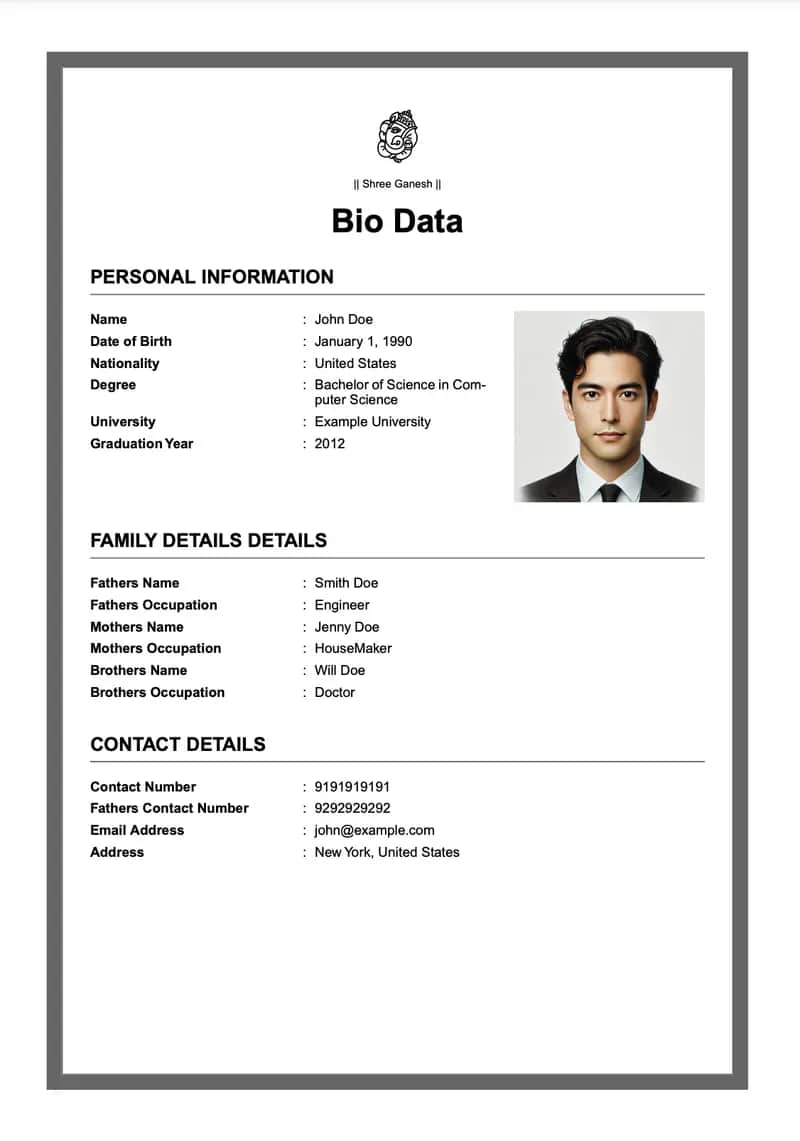
What Is a Gujarati Marriage Biodata?
A Gujarati marriage biodata is a matrimonial profile created specifically for the Gujarati community. Known for its strong business ethos, close-knit family structures, and rich cultural traditions, the Gujarati community looks for specific details in a marriage biodata gujarati style that go far beyond the standard format.
Need a general starting point? Our free marriage biodata maker on the homepage includes community templates, guided fields, and instant PDF download — no registration required.
Whether you are from Ahmedabad, Surat, Vadodara, Rajkot, or the global Gujarati diaspora in the UK, USA, Canada, or East Africa, your biodata should reflect community expectations. Gujarati families often prioritise gotra (lineage), kuldevi (family goddess), sub-community identity (Patel, Shah, Mehta, Desai, etc.), family business background, and whether the match is within the Jain or Vaishnav tradition. At MyPerfectBiodata, you can create your Gujarati marriage biodata for free, include all community-specific fields, and download a print-ready PDF instantly.
Gujarati Marriage Biodata Format — Complete Guide
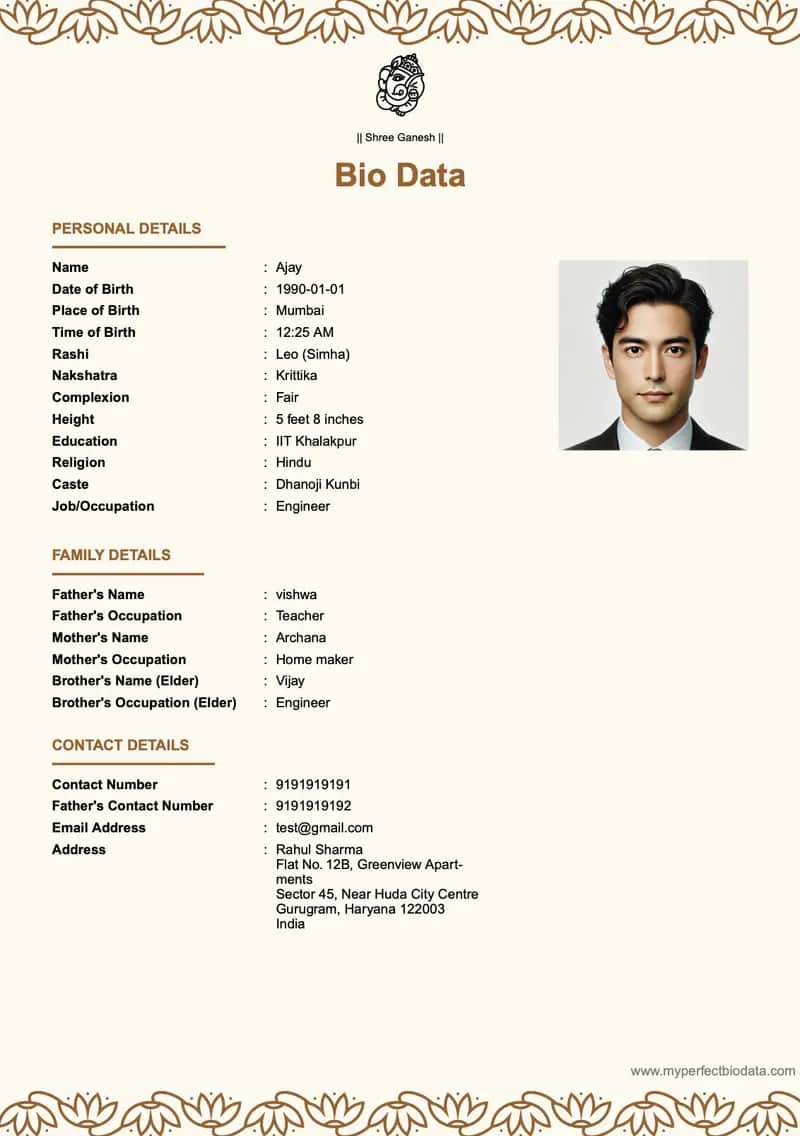
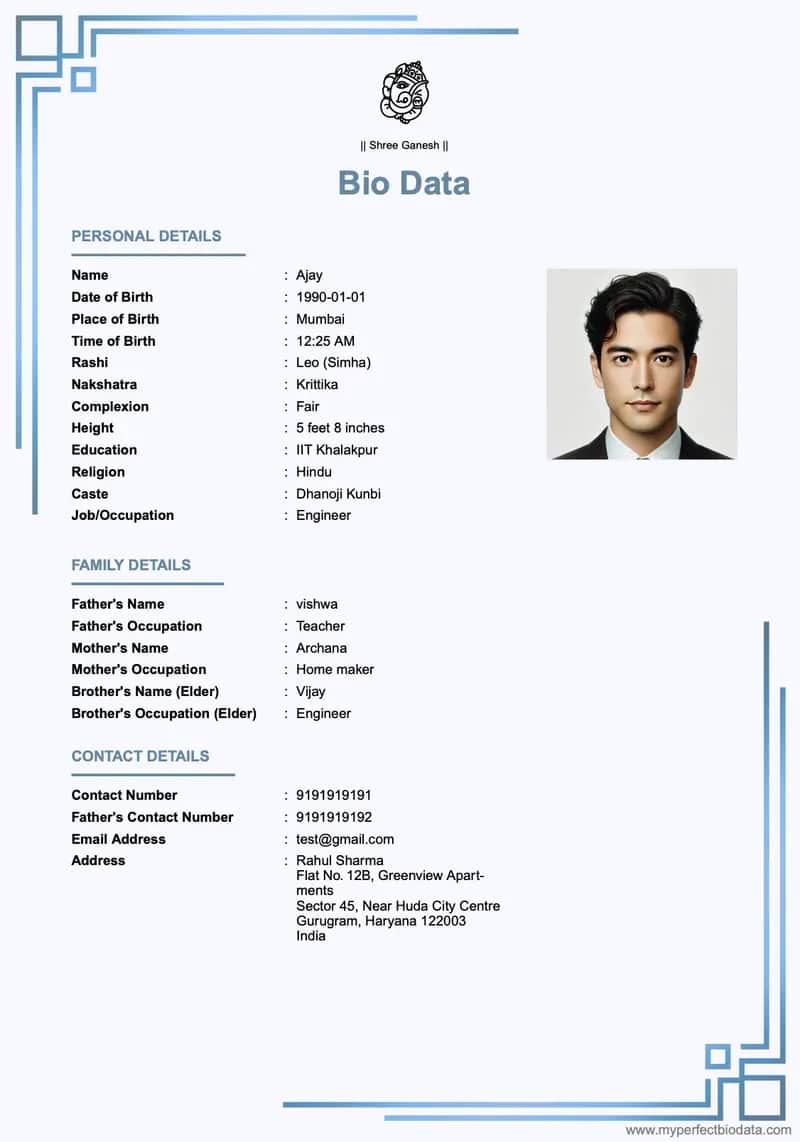
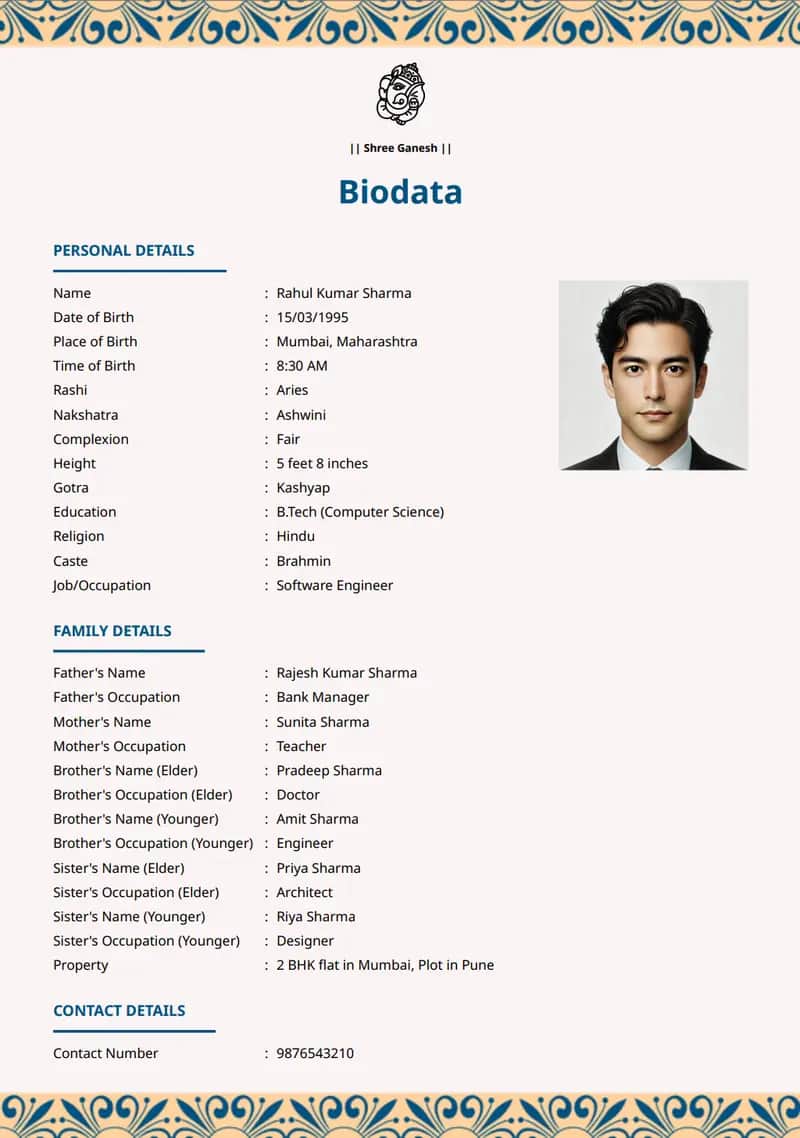
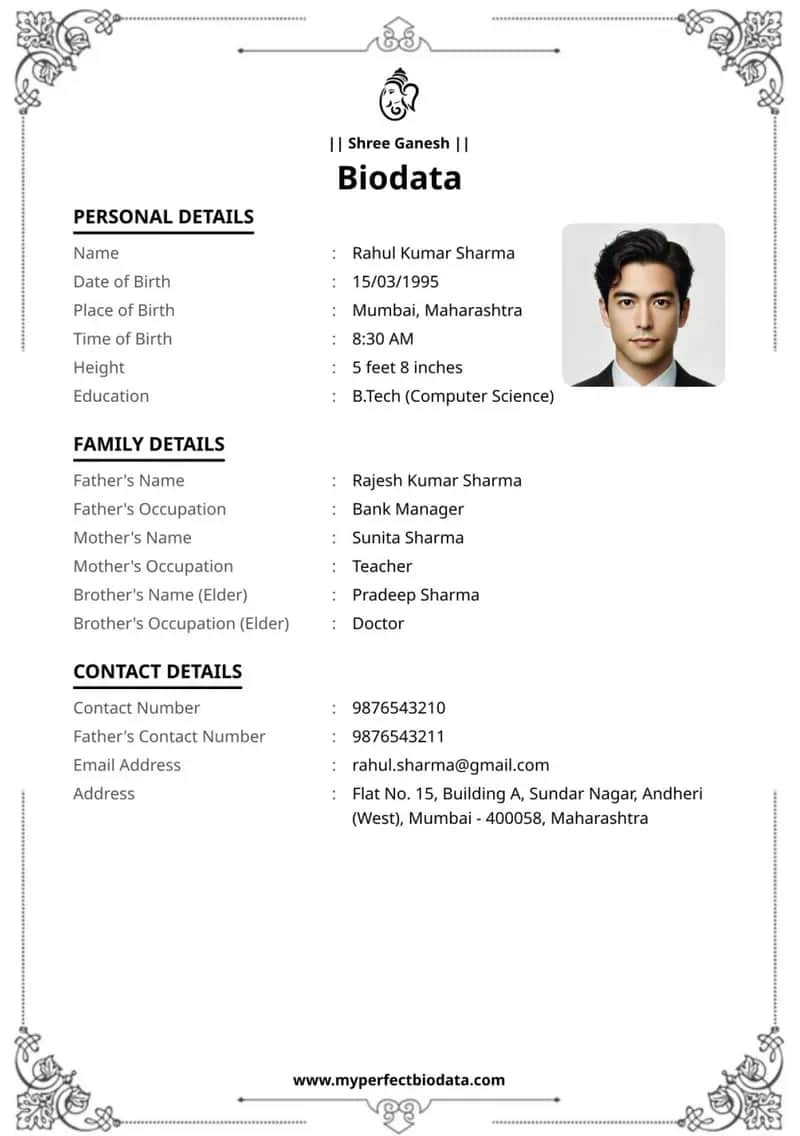
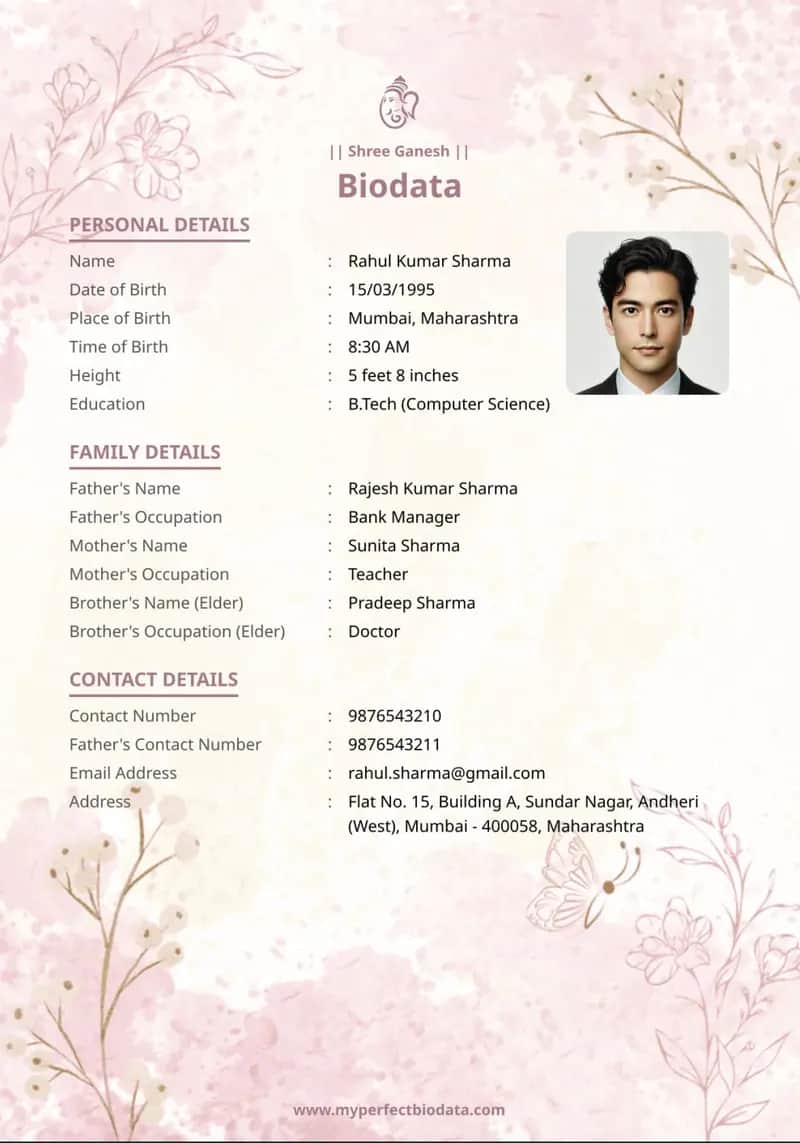
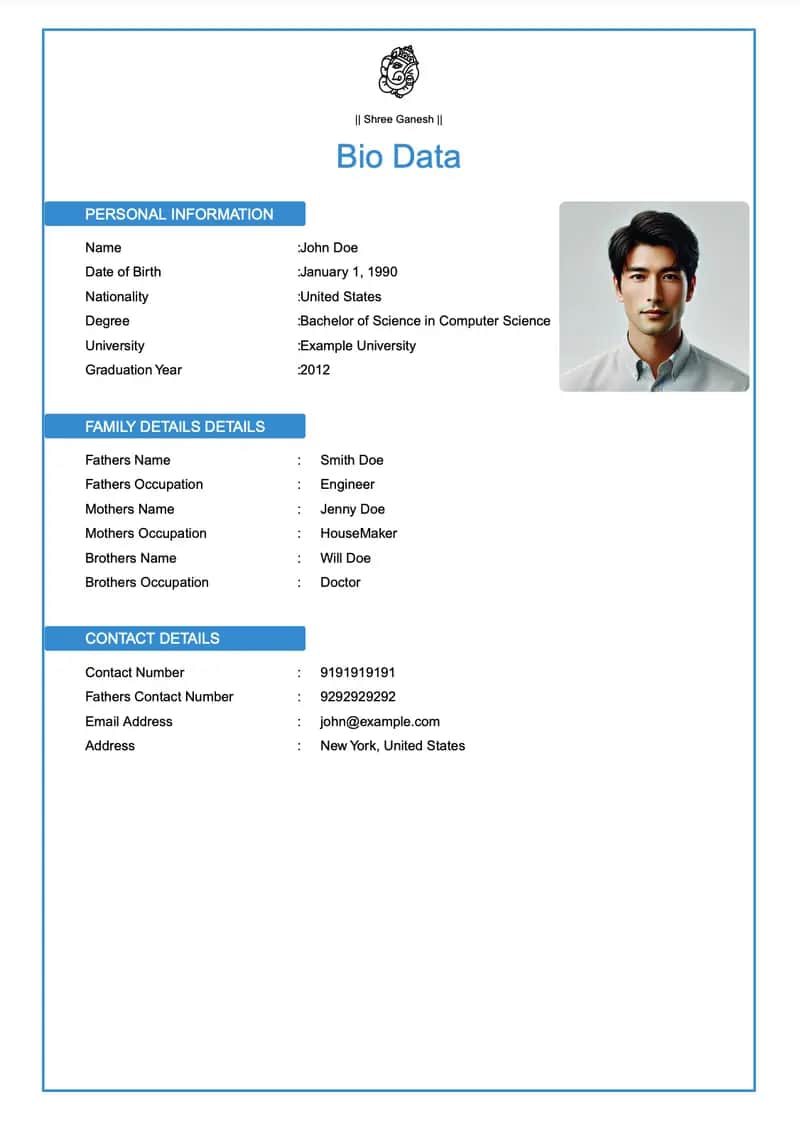
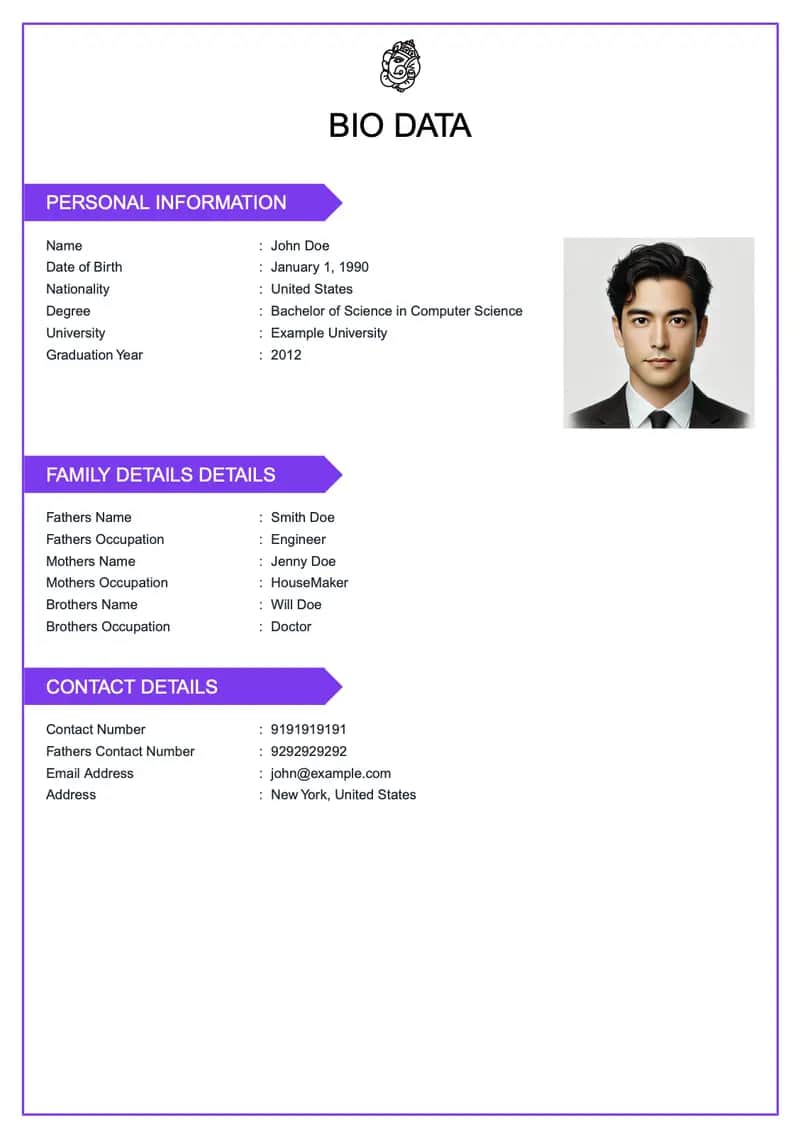
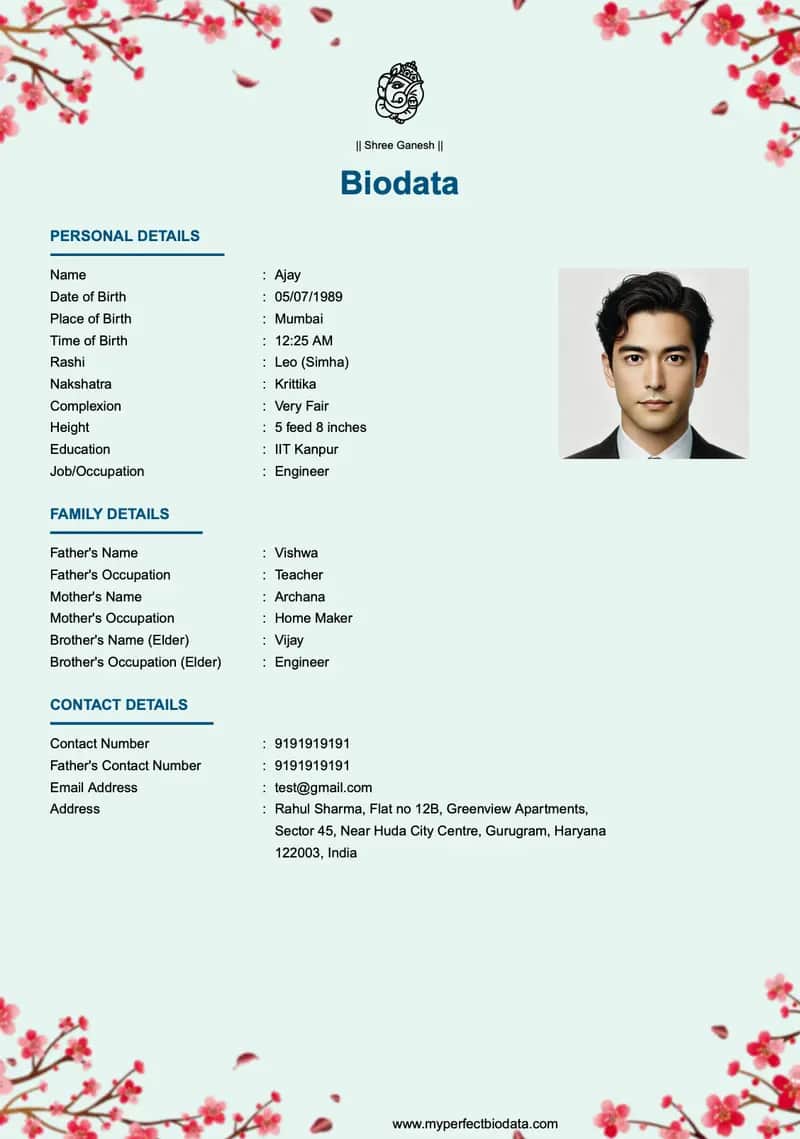
The gujarati marriage biodata format is designed to reflect the community's emphasis on family, business, and cultural identity. Follow this guide to include everything a Gujarati family expects.
Personal Details
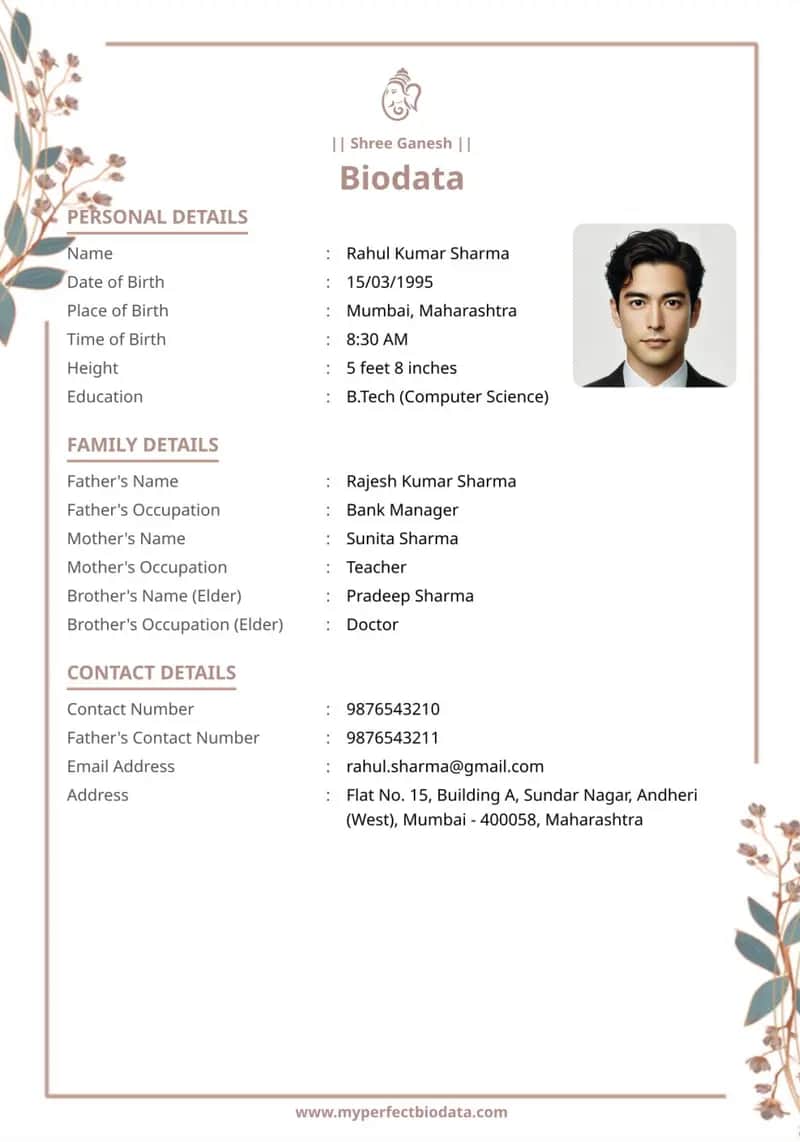
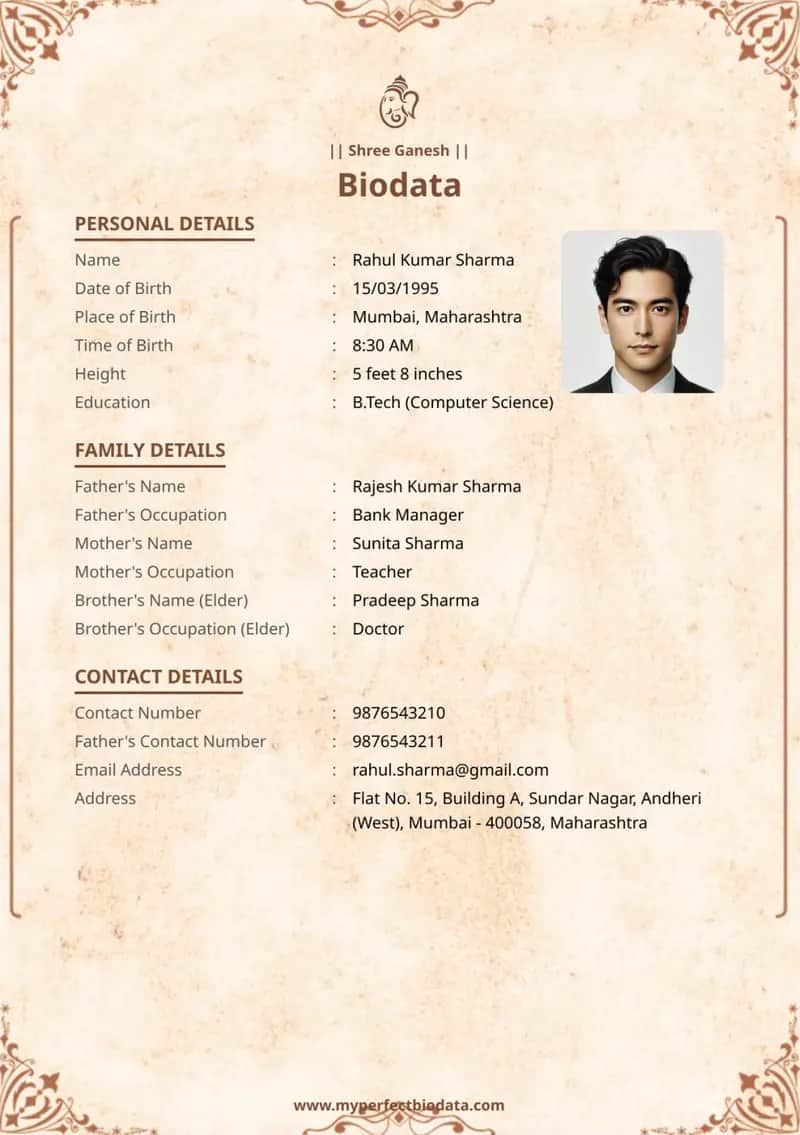
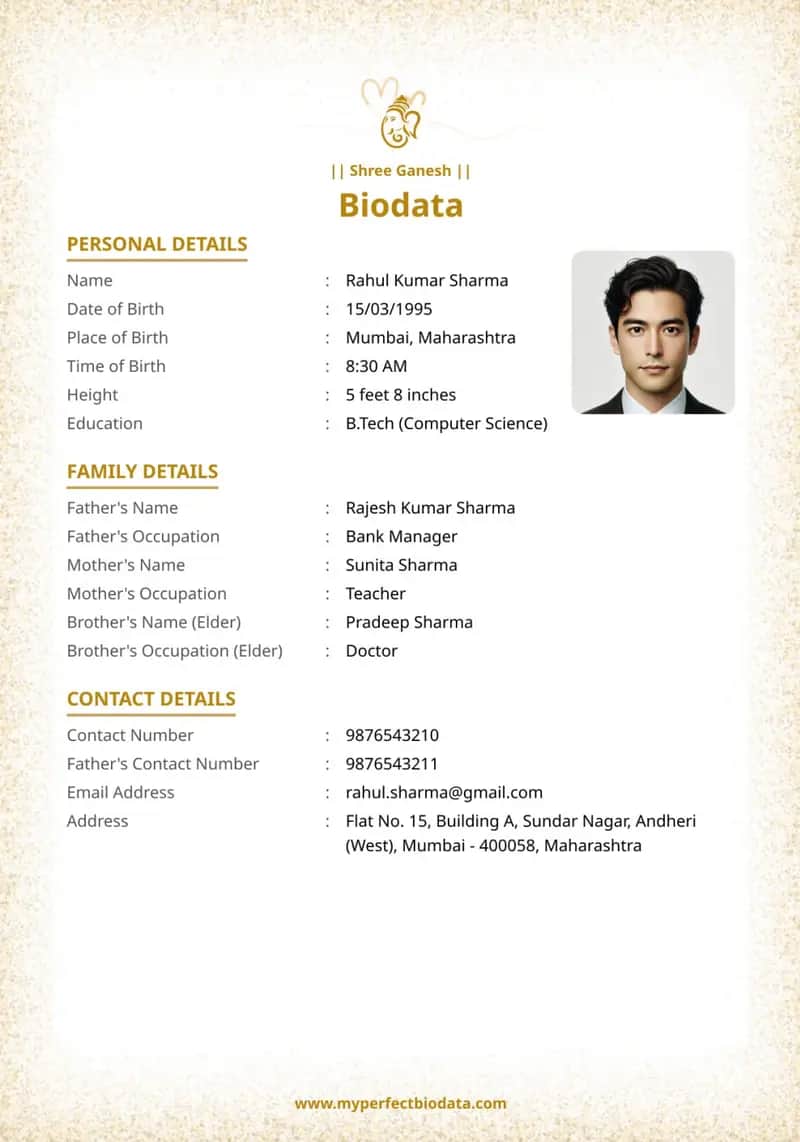
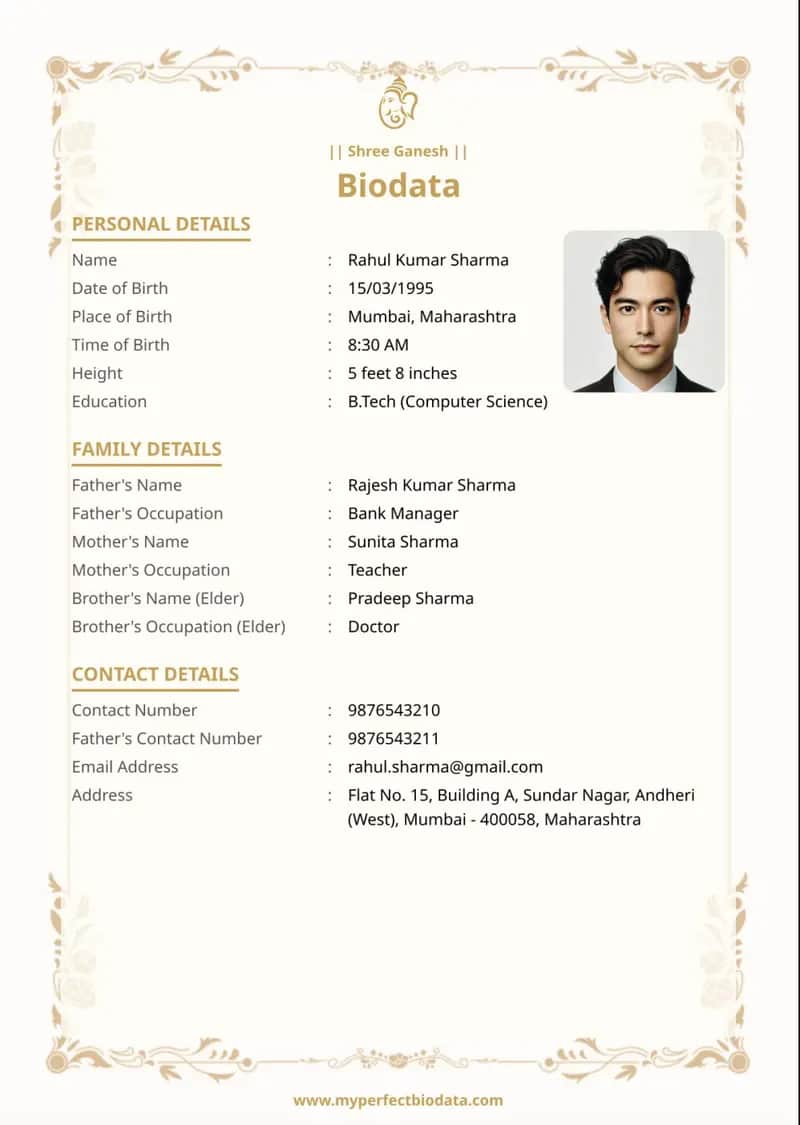
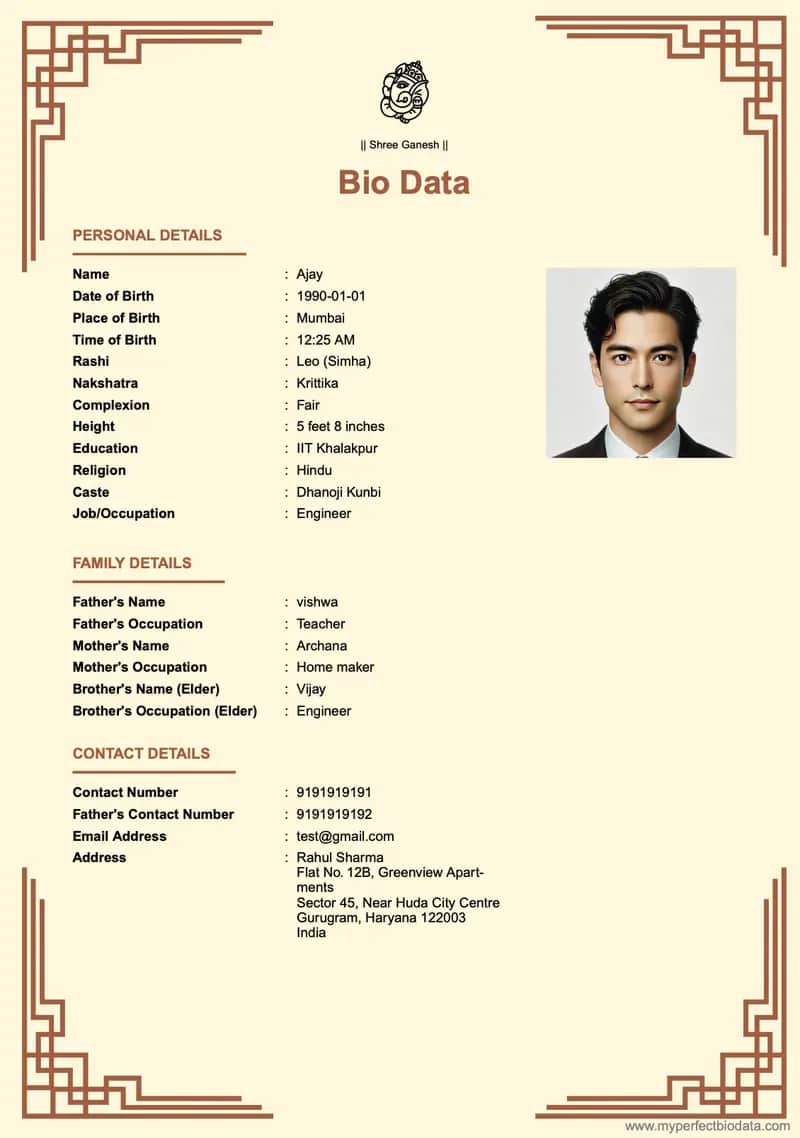
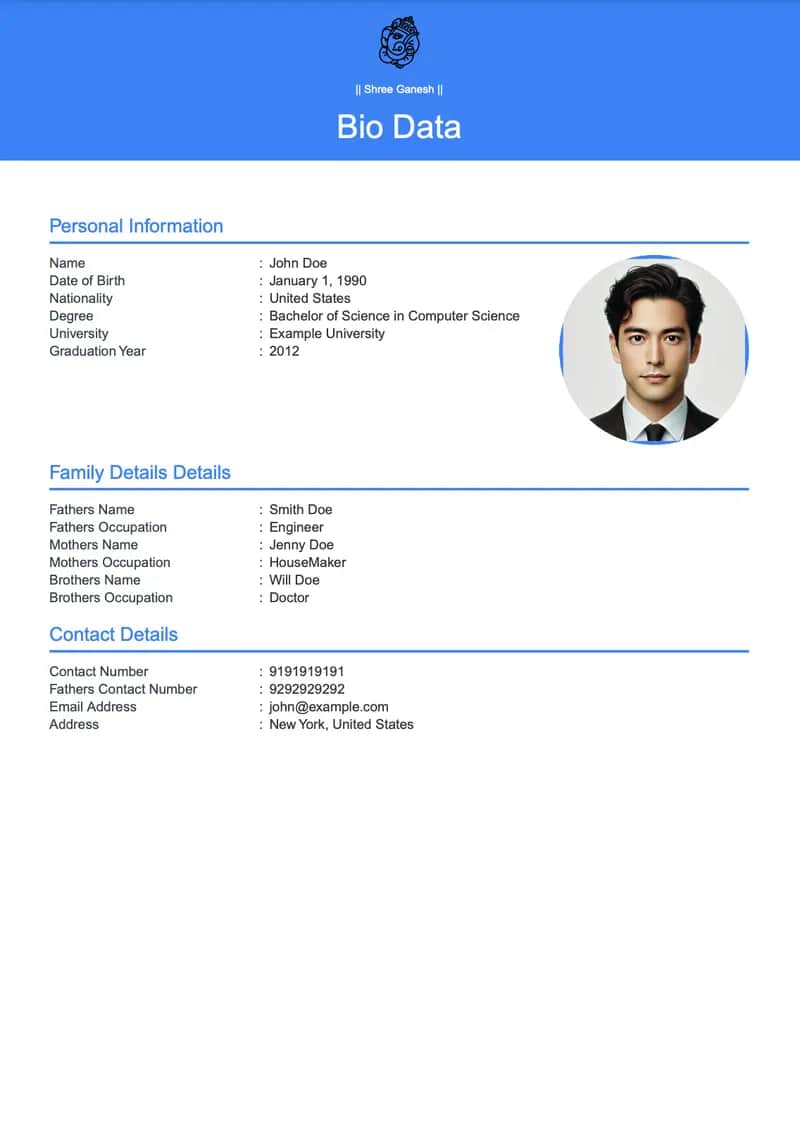
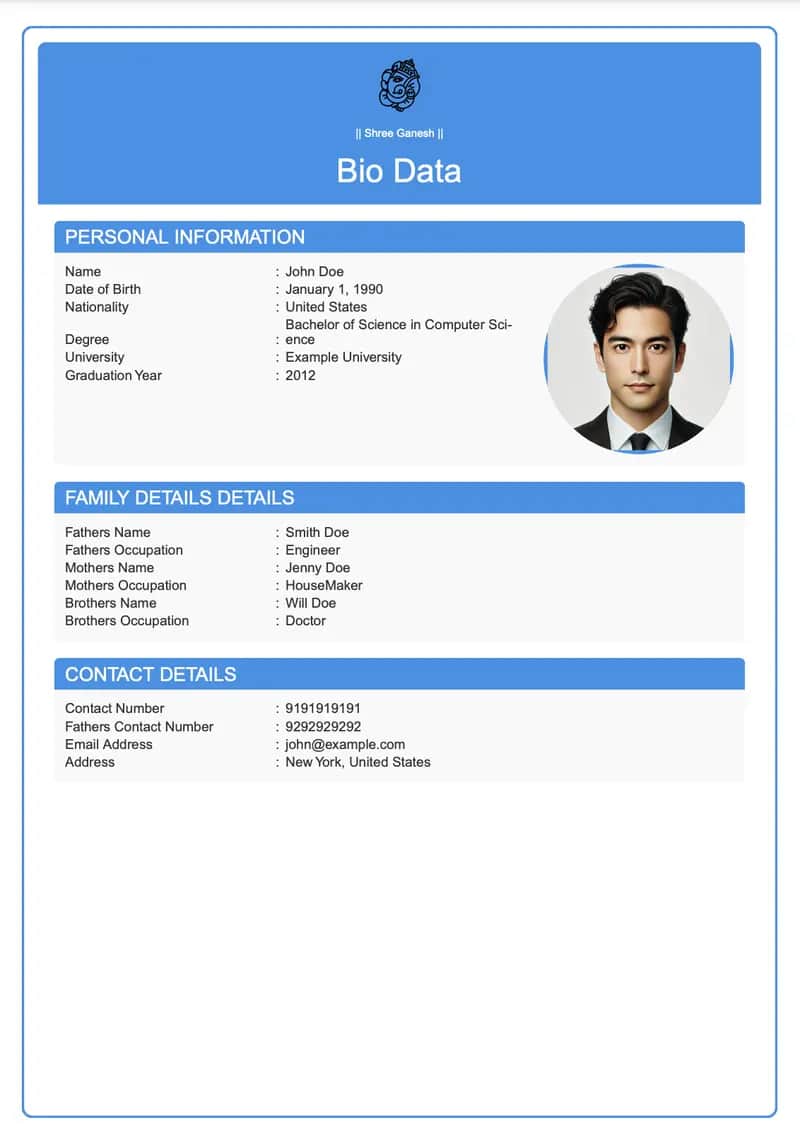
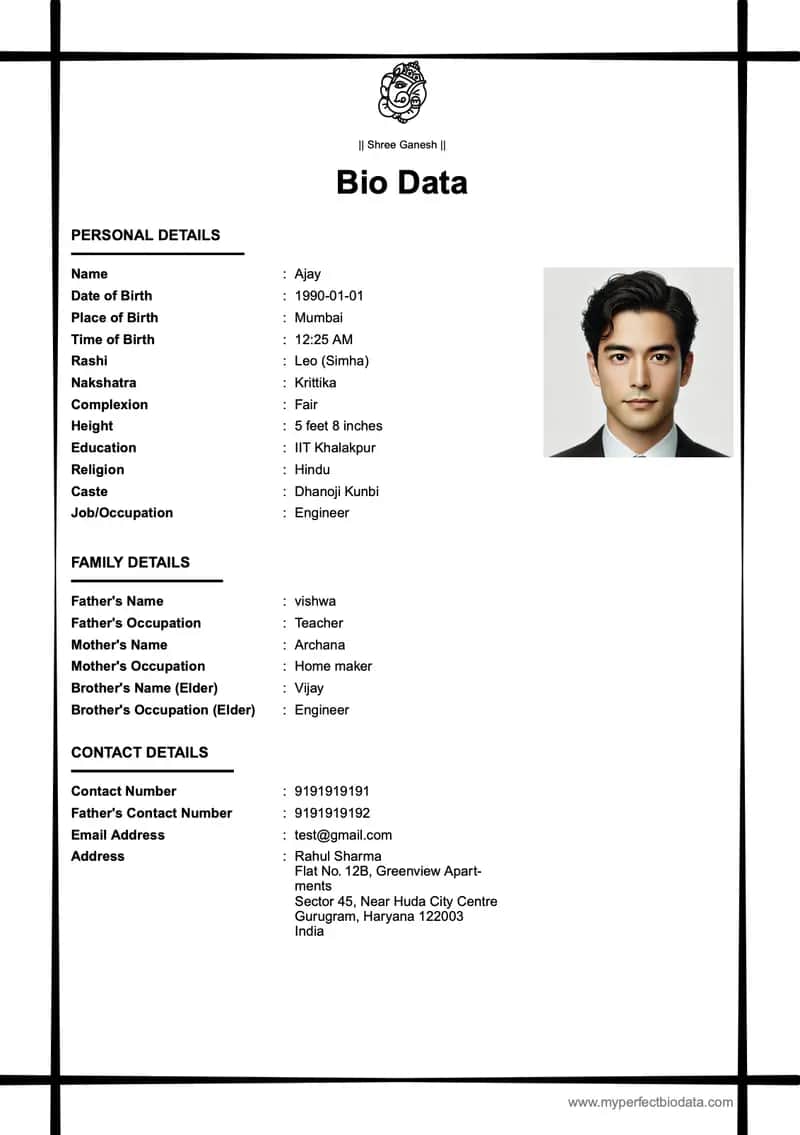
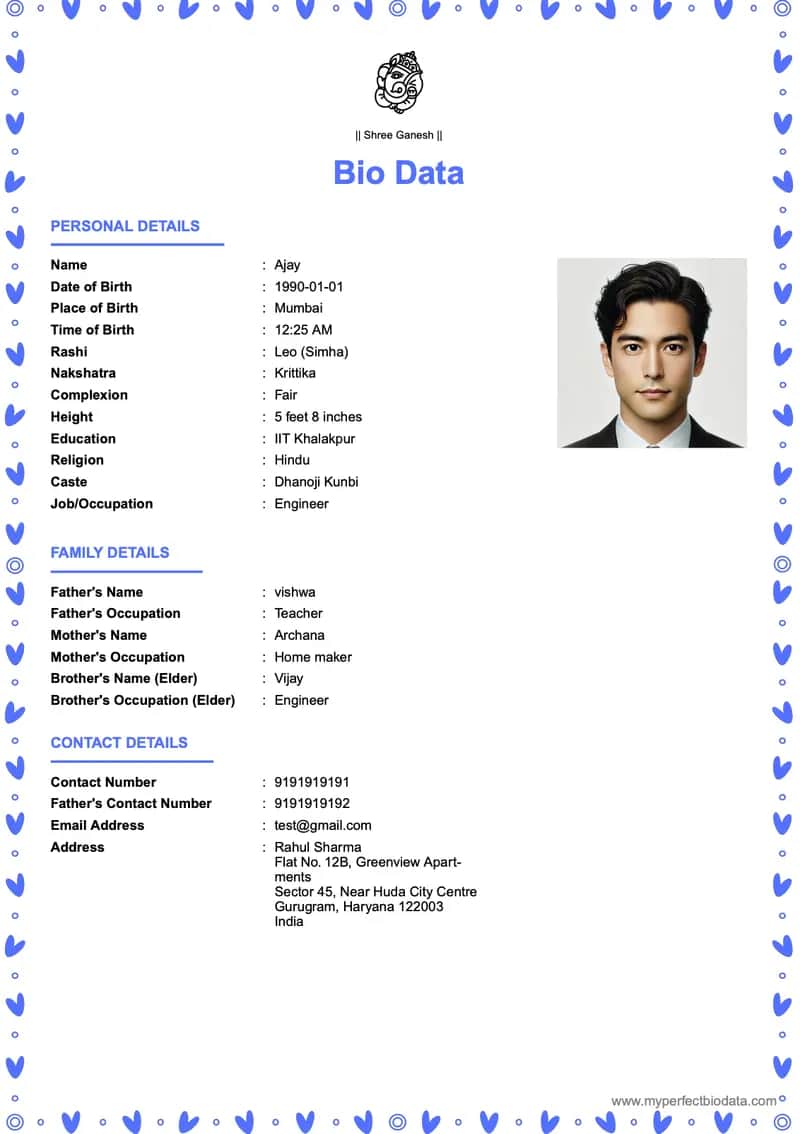
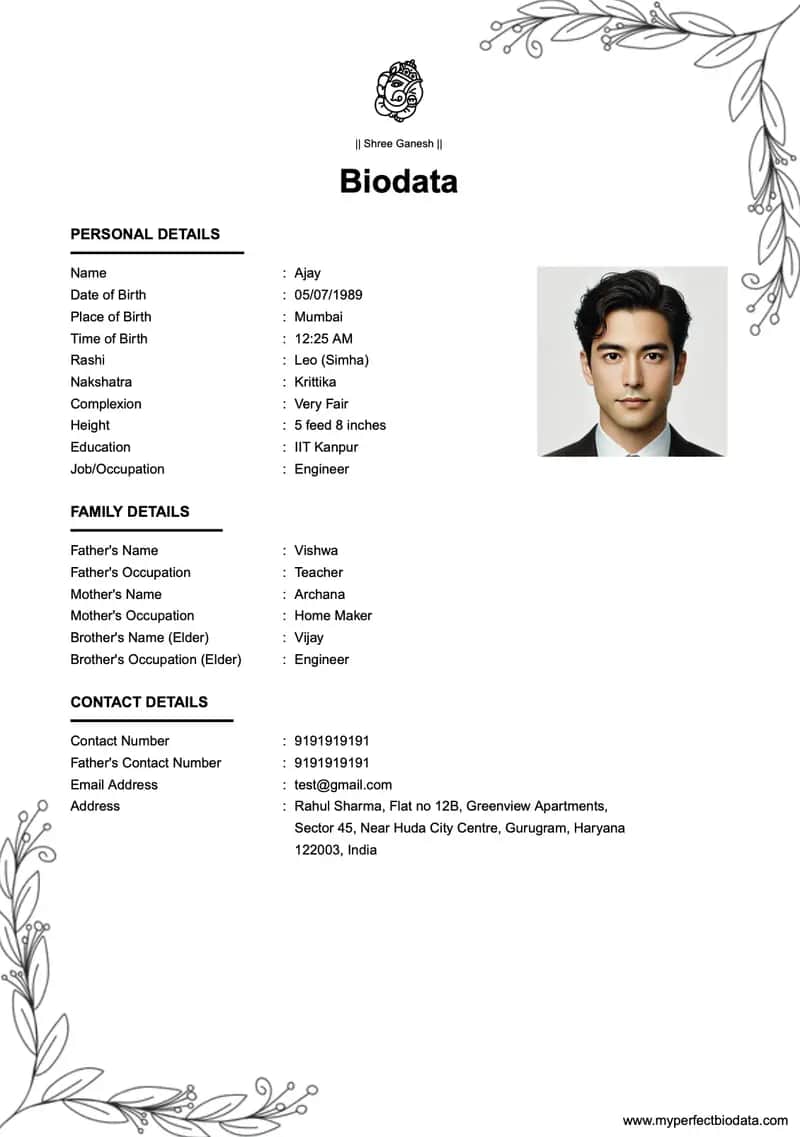
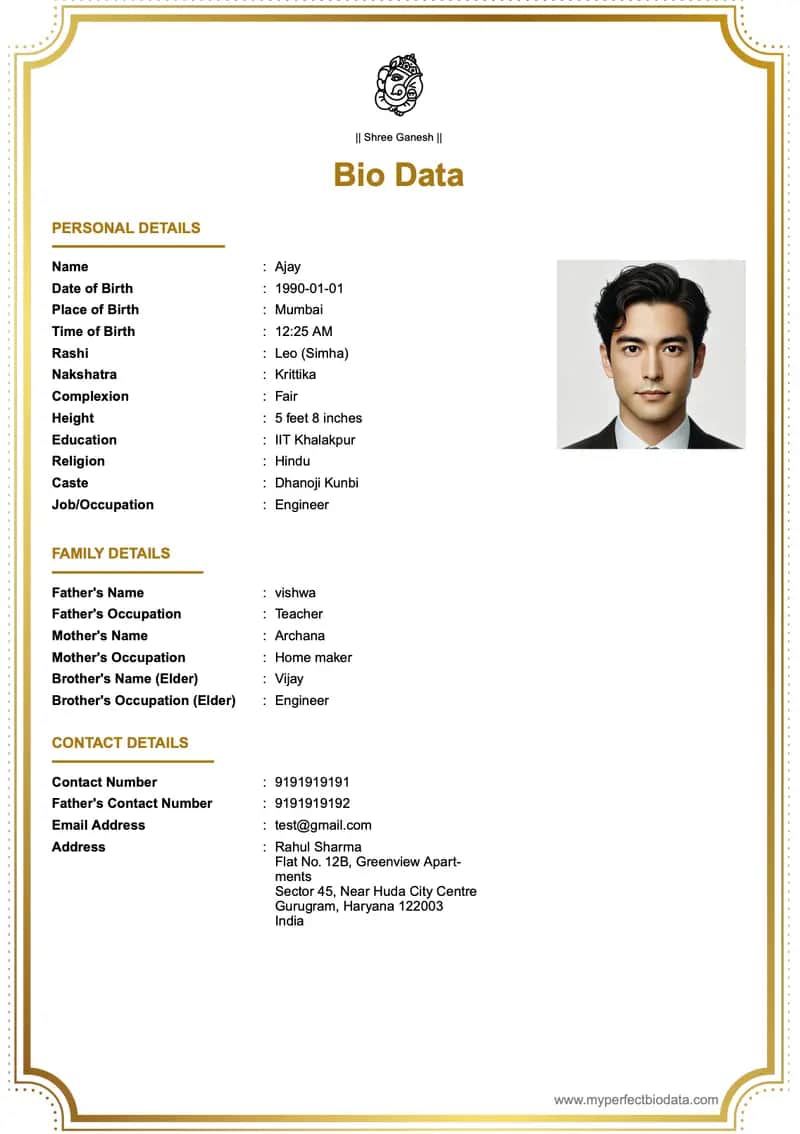
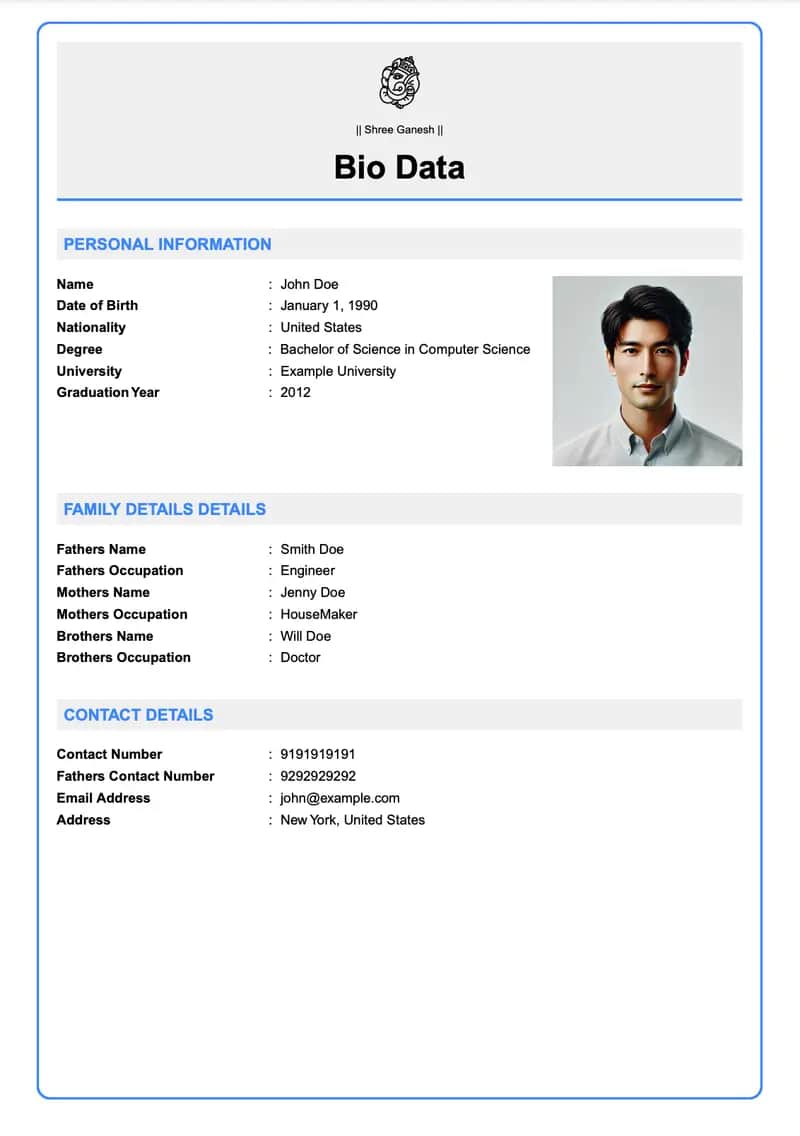
Start your biodata format for marriage in gujarati with the essentials: full name and date of birth; height, weight, and complexion; religion (Hindu — Gujarati, or Jain), caste, and sub-caste; gotra / surname; mother tongue (Gujarati); dietary preference (vegetarian / Jain vegetarian / non-vegetarian); and current location and hometown.
Gujarati-Specific Fields — Gotra, Kuldevi & More
These are the details that define a marriage biodata format gujarati:
- Gotra / Surname (Log) — Your family lineage. In the Gujarati community, the surname itself often indicates the gotra. If you are creating a gujarati patel marriage biodata, your Patel sub-community (Leva, Kadva, etc.) and gotra are essential.
- Kuldevi / Kuldevta — Your family's traditional goddess or deity. Families frequently exchange kuldevi information early in match discussions.
- Sub-Community — Specify whether you are Patel (Leva, Kadva, Matiya, etc.), Shah, Mehta, Desai, Modi, Trivedi, Mistry, or another sub-community. Many Gujarati families search exclusively within their sub-community.
- Jain / Vaishnav / Swaminarayan / Other — Indicate your religious sect. If dietary requirements include strict Jain vegetarian (no root vegetables), mention this here.
- Family Business — Mention if your family runs a business, its nature (diamond, textile, pharmaceutical, trading, etc.), and your role in it. This detail is often valued as highly as formal educational qualifications.
- NRI / Green Card Status — Mention if you hold permanent residency or citizenship abroad, or if you are open to an NRI match. This is one of the most frequently asked questions in Gujarati matrimonial discussions.
- Rashi / Nakshatra — Moon sign and birth star for horoscope matching, if your family follows this tradition.
- Manglik Status — State clearly whether you are Manglik, non-Manglik, or not yet checked.
Education & Career
Present educational qualifications, occupation (salaried professional, business owner, or both), company or business name and industry, annual income, and career aspirations.
Family Background
In the marriage biodata format in gujarati style, family background is paramount: father's and mother's names, occupations, and education; siblings; family values (traditional, moderate, or liberal); and living arrangement — joint families remain very common and respected in the Gujarati community.
Partner Expectations
Describe your ideal life partner: preferred age range and height, education and professional background, sub-community preference (Patel, Jain, open to all, etc.), gotra considerations, NRI status preference, dietary and religious expectations, horoscope matching requirements, and location preferences (Gujarat, Mumbai, abroad).